





ann arbor MICHIGAN
University of Michigan, Taubman College of Architecture + Urban Planning
Critic: Adam FURE
suckerPUNCH: Describe your project.
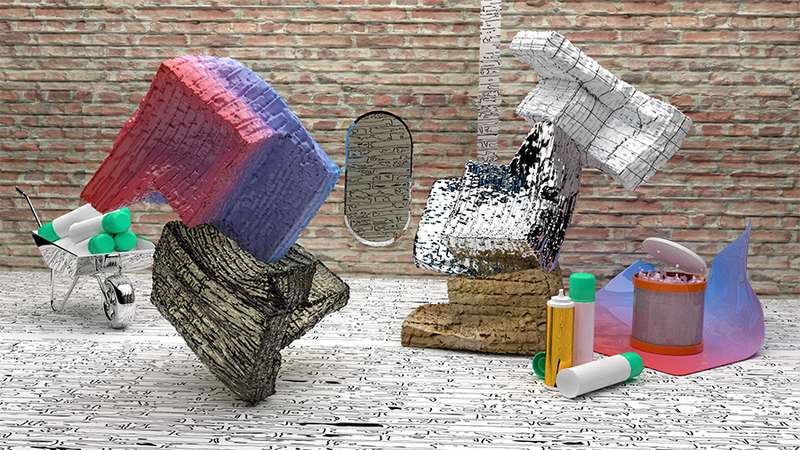
Christopher CAMPBELL: Soft Brick is a series of objects that combines material texture with digitally simulated motion to reorient our understanding of materiality in digital design…
-
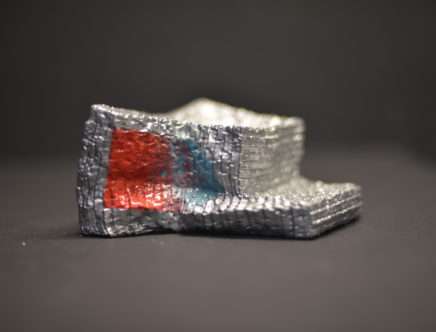
- Christopher CAMPBELL, “Soft Brick.”, 3D Print
-
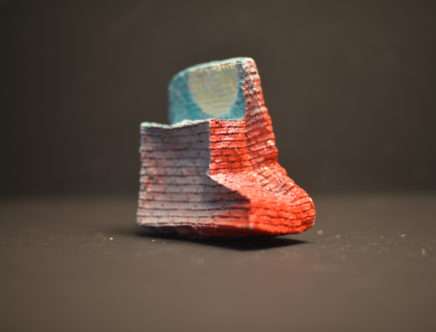
- Christopher CAMPBELL, “Soft Brick.”, 3D Print
-
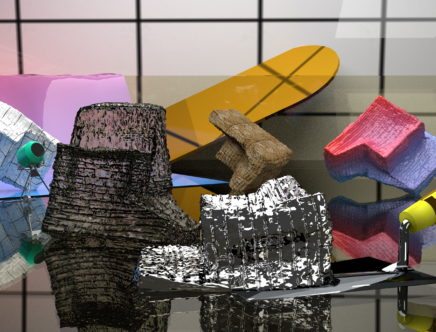
- Christopher CAMPBELL, “Soft Brick.”, RENDER
-
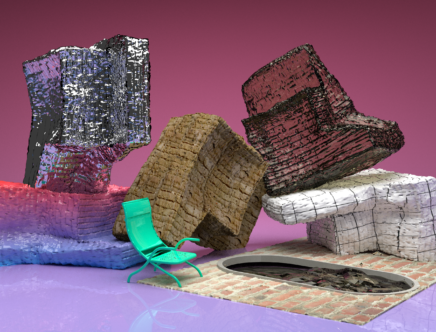
- Christopher CAMPBELL, “Soft Brick.”, RENDER
“What do you want Brick?”
- Louis Kahn
… Adopting digital techniques of 3D motion graphic art, the project reassociates and reassembles our approach to form generation and material translation.
When Louis Kahn asked this question, he emphasized the importance of honoring materials, utilizing their physical capabilities, and unlocking their expressive potentials. In our contemporary postdigital culture, materials no longer have the same claim to authenticity. Yet, with digital processes and novel fabrication techniques, they offer more expressive potential than ever. Architects are presented the opportunity to “design materials and shape their possibilities and appearance, instead of using them in a passive manner.” Soft Brick is a series of objects that combines material texture with digitally simulated motion to reorient our understanding of materiality in digital design.
Brick, a fundamental building component, stacked into rigid, immovable structures, embodies an inherent texture, coloration, and surface roughness. In a digital softwares, however, familiar rigid brick assemblies are reformed into moldable configurations, subjected to digital forces without crumbling. Their vertex meshes are set in motion in a physics simulation, crashing softly into a fixed plane while still maintaining the legibility of its prior shape. The resulting model is 3D printed and used in the construction of a silicon mold for concrete, resin, and plaster casts. Through the materialization process, the object gains qualities of the digital and physical mediums it is exposed to - vertex mesh, plastic contour, and material casts. Image, digital forces, and material substances combine, physically manifesting into a single object. Brick texture, now squished, glossy, colorful, and/or metallic is reassociated in a multiplicity of misbehaving materials.
Project Context:
This was my final project in Adam Fure’s Advanced Fabrication course at the University of Michigan, Taubman College in the Fall of 2017. The development of the project throughout the semester was greatly influenced by the readings and discussions in the class as well as the Becoming Digital conference, workshops, and lectures held at Taubman College this year. Additional research of the 2017 Fall semester in my thesis-prep seminar led by Cyrus Penarroyo and independent study with Oliver Popadich, advised by Hans Tursack, were major influences in the thought and formulation of this work.
sP: What were you reading/listening to/watching while developing this project?
CC: From Immateriality to Neomateriality: Art and the Conditions of Digital Materiality, Christiane
Paul. Postdigital Materiality, Ellie Abrons + Adam Fure; For Real, Ellie Abrons, Alchemical Acts, Ang Li; Materials Against Materiality, Tim Ingold; Seamless: Digital Collage and Dirty Realism In Contemporary Architecture, Jesus Vasallo; In Defense of Poor Image, Hito Steyerl; In Free Fall: A Thought Experiment on Vertical Perspetive, Hito Stereyl; Image Object, Artie Vierkant;
Stuff of Bits, Paul Dourisch Everything is Already an Image, John May; Material Misuse, Shelia Kennedy; Towards a New Materiality, Antoine Picon.
sP: Whose work is currently on your radar?
CC: The work of artists such as Clement Valla, Artie Vierkant, Filip Dujardin and architects such as
Philip Schaerer, LAMAS, T+E+A+M, EXTENTS, Young + Ayata, MVRDV, Herzog + deMeuron,and Frank Gehry are some of my current inspirational influences.
Additionally, the prevalence of work by 3d motion graphic artists working through the novel
mediums of Cinema 4D, Blender, and Houdini have become a major fascination of mine. This
project and my developing thesis research began with an interest in these uncanny animations.
Some of these artists include Andreas Annerstedt, Esteban Diacono, Brian Henry, Oliver Latta,
+ Antoni Tudisco (to name a few).
