






ann arbor MICHIGAN
University of Michigan
Critic: Cyrus PEÑARROYO
LOOK UP: this show began as a representation seminar that asked students to design a venue for the collective consumption of a materialized image.
- Kayla FORD and Alicia MORRIS, “LOOK UP.”, Model Photograph
- Nora BEGIN and Aaron WEAVER, “LOOK UP.”, Model Photograph
- Jinhui HE and XINYUE WEI, “LOOK UP.”, Model Photograph
- Collaborative WORK, “LOOK UP.”, Model Photograph
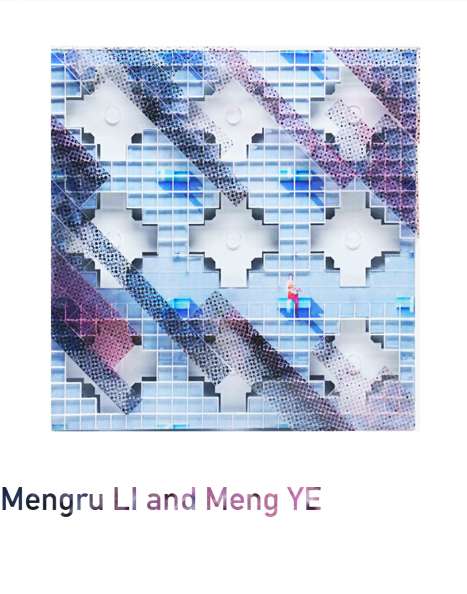
Students, in three-week sessions, were asked to design a suspended ceiling for a musical performance. This ceiling would act as the temporary backdrop for a musician’s short-term residency in a historic civic building. Components of a drop ceiling were repurposed because of their appeal to the collective imagination – our familiarity with (and desensitization to) the shapes and configurations of this flat surface, collapsed against the iconography of the existing space, is what excites the performer. Typically reserved for the coordination of mechanical systems and atmospheric effects – such as lighting, ventilation, and acoustics – this blank horizontal plane has the potential to do so much more if reanimated by its repressed imagistic identity. To this point, students incorporated selections from their assigned artist’s videography into the logics of the drop ceiling to generate content. Digitally manipulating this imagery and mapping it to the false ceiling helps to extend and reenvision prior narratives embedded within these architectural fragments. While the historic site may call forth nostalgic sentiments about civic values, students had the opportunity – by exploiting contemporary media consumption habits – to use this suspended surface for sponsoring new optical effects that could make an engaged public of an otherwise passive audience.
Using the convention of the Reflected Ceiling Plan (RCP), the goal was to create a mockup that combines multiple histories; elicits varied readings (fast/immediate vs. slow/delayed); and works between media. At once a ceiling tile and a depiction of a scenographic strategy, the final models attempted to close the gap between representation and actuality; image and object; physical and digital.
