






ann arbor MICHIGAN
University of Michigan
Critic: Meredith Miller
suckerPUNCH: Describe your project.
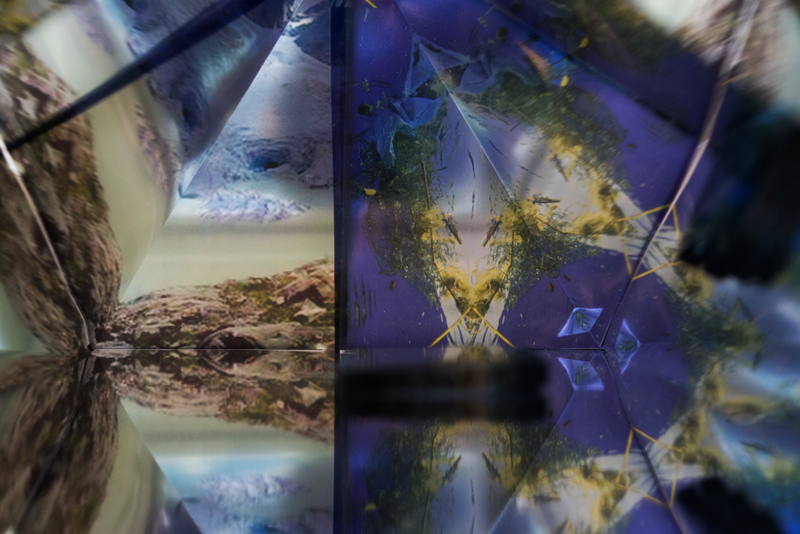
Vanessa FLEBBE: This thesis project seeks to transform how architecture participates in this mediation through the design of artificial environments. The combination of mirrors and imagery will assist in this mediation by placing the subject in an immersive environment.
- Vanessa FLEBBE, “Mediated Environments.”, Model Photo
- Vanessa FLEBBE, “Mediated Environments.”, Model Photo
- Vanessa FLEBBE, “Mediated Environments.”, Model Photo
- Vanessa FLEBBE, “Mediated Environments.”, Model Photo
- Vanessa FLEBBE, “Mediated Environments.”, Model Photo
- Vanessa FLEBBE, “Mediated Environments.”, Model Photo
Our knowledge of climate change is inevitably mediated, and the images that circulate this knowledge vary from source to source. This thesis project seeks to transform how architecture participates in this mediation through the design of artificial environments. The combination of mirrors and imagery will assist in this mediation by placing the subject in an immersive environment.
The objective is to investigate different images media uses to inform issues connected to climate change to their audiences. As a response, the thesis proposes interventions located in three distinct spaces adjacent to three major media headquarters in New York City. These locations are strategic since they will not only be seen by the general public, but they will always be seen by people that work in these different broadcast news media. Taking into consideration specific characteristics of each site, these artificial environments range in scale and reimagine environments that are uncommon in the city but at the same time are known to be victims of climate changes.
Mirrors in combination with collage imagery and objects visually transform these existing sites to immerse individuals in new surroundings where they can see themselves within each artificial environment. Mirrors have been used by individuals such as Robert Smithson and Andrea Branzi (Archizoom Associati) to create specific effects. For instance, Robert Smithson’s Mirror and Crushed Shells creates an illusion of a complete object even though only a quarter of it is real. The mirror effects that each of these projects achieve are reflected in each design. The mission of these artificial environments is to create an experiential connection between the individual and the exaggerated surroundings. These new surroundings will form an architecture which creates a perceptive awareness of current and possible future effects of climate change.
sP: What or who influenced this project?
VF: Environmental concerns, context, media, spaces, experiences, perceptions, knowledge etc.
sP: What were you reading/listening to/watching while developing this project?
VF: Readings: Teddy Bear Patriarchy: Taxidermy in the Garden of Eden - Donna Haraway; Gericault, the Panorama, and Sites of Reality in the Early Nineteenth Century – Jonathan Crary; A Sedimentation of the Mind: Earth Projects – Robert Smithson; The Architectural Parallax – Slavoj Zizek, Gaia, the Urgency to Think (and Feel) – Isabelle Stengers; Natural Contract – Michael Serres; Precis of Action in Perception: Philosophy and Phenomenological Research – Alva Noe
sP: Whose work is currently on your radar?
VF: NEMESTUDIO, Design Earth, Bureau Betak, LAMAS, Herzog and de Meuron, Miralles Tagliabue… These are just a few.
