






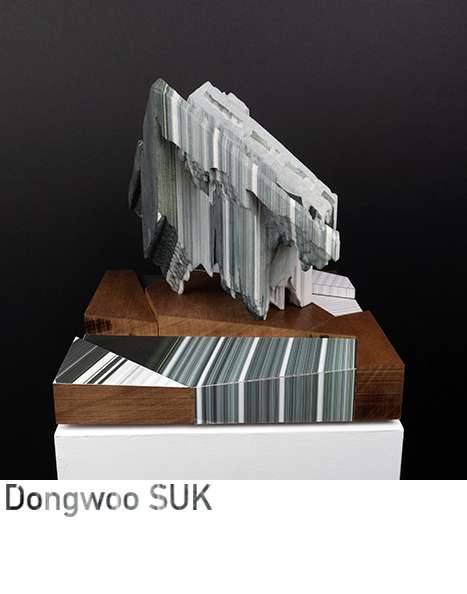
los angeles CALIFORNIA
SCI-Arc
Critic: Maxi SPINA
suckerPUNCH: Describe your project.
Dongwoo SUK: This thesis looks at the way digital imaging technology mediates the translation between images and objects.
-
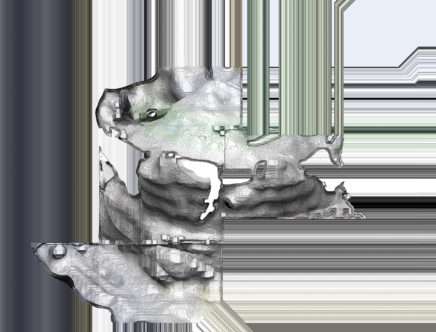
- Dongwoo SUK, “LEGO-CY.”, Plan
-
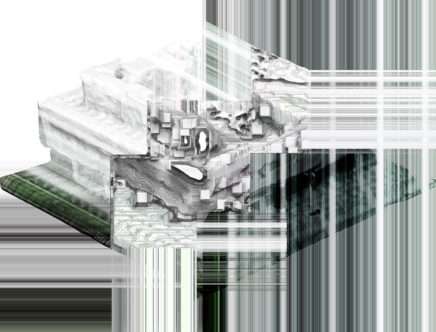
- Dongwoo SUK, “LEGO-CY.”, Axon
-
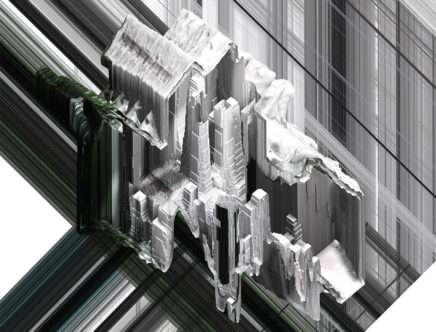
- Dongwoo SUK, “LEGO-CY.”, Axon
-
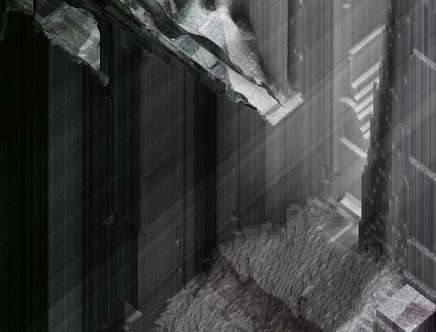
- Dongwoo SUK, “LEGO-CY.”, Detail
-
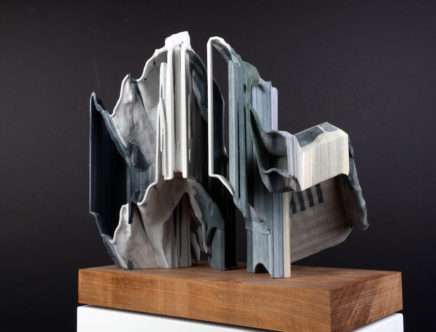
- Dongwoo SUK, “LEGO-CY.”, Model Photo
-
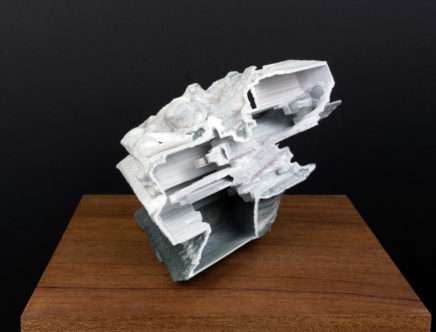
- Dongwoo SUK, “LEGO-CY.”, Model Photo
The project uses the term image not to refer to the entirety of architectural representation, such as drawings or renders, but to a specific condition of image-making prevalent in architecture and most industries engaged with creative software. Image here means the technical condition of producing a pictorial form through the manipulation of information such as points, pixels, or numbers. I am going to argue digital images can open up new possibilities to retranslate canonical architecture to move beyond the fixed status of the original.
The project begins with Lego models of canonical architecture, in this case the Frank Lloyd Wright’s Guggenheim, Robbie House, Le Corbusier’s Unite d’habitation, and Villa Savoye. As a physical instantiation of the canonical project, Lego models share similar properties as its digital counterpart might. Here the self contained individual unit of the lego piece is a physical approximation of the similar and ubiquitous pixel.
However, instead of investigating the physical unit of a modular lego, this thesis is interested in what digital technicians call the “logical unit” of the pixel. The thesis is not just a reproduction of Lego Architecture but a technical experiment that aims to investigate how imaging software reconditions the architectural process of translating between two and three-D. It is about Geometry after image.
While the lego model is a scalar object, photographing the model immediately de-scales the object. In the logic of the photograph, the lego object is potentially scale-less. In the translation from the original object to digital photograph, from digital photograph to digital object, the project looks at image data and how this can be extracted to form new three-dimensional geometries.
In this process, many image factors captured in the photograph, such as light & shadow, reflection & refraction, resolution and noise -that could only possibly be captured as data through a lens of digital camera, can also render new objects. This means the image of the object is not the only thing captured in the camera; indeed, it contains more information than we actually recognize in the photograph. It contains what digital photographers call artifacts -an undesired or unintended alteration in data born out of digital imaging techniques. In this thesis, this data forms the basis of projection to create other geometrical conditions.
But what is at stake in the extraction of depth from an image? In traditional architectural drawing, depth is embedded in the picture plane of the mathematically constructed perspective view, or implied in the logic of orthographic drawing, which is a category of projective geometry. Techniques of photogrammetry usually need more than 50 photos to create three-dimensional geometry in 360 degrees. In order to create an object that is high fidelity to the original, the more thorough the photographic survey, the better. The image, and its proliferation, become the vehicle to reconstruct the object. Alternatively, this thesis is interested in understanding the image as itself a container or condition. Via a frame constraining strategy, several photos are taken from a certain vantage point in order to detach from the original object as a whole. What forms of readership can the technical image afford? What opportunities store the cache of hidden information behind the scene of the photographic image? Through these experiments, objects and images begin to blur the boundary of medium specificity in architecture and allow to mediate a constant translation between 2d images and 3d objects.
sP: What were you reading/listening to/watching while developing this project?
DS: I read The work of Art in the Age of its Technological Reproducibility, and Other writings on Media by Walter Benjamin and Seamless : Digital Collage and Dirty Realism in Contemporary Architecture by Jesus Vassallo.
sP: Whose work is currently in your radar?
DS: Fictions Series by Filip Dujardin, Arhictectural Drawings by Auguste Choisy and Powers of Ten by Charles and Ray Eames
