



Ads
Ads

Ads

Ads

Ads

Ads

Ads

Ads


Robert SEIDEL, "Advection."
bad rothenfelde GERMANY

The work Advection consists of several visual études projected on the continuously changing volume of a water fountain. Interconnected with both the circadian rhythm of their natural surroundings as well as the meteorological nuances of seasonal change from autumn to winter—the fixed études alter their density, texture and luminescence over the exhibition time. . . .

[MORE]

Emily HAYDEN & Robert MOSBY, "Snuggle." Model.
new orleans LOUISIANA

Tulane University School of Architecture
Digital Output Lab & Tulane Millhaus

suckerPUNCH: Describe your project.

Emily HAYDEN & Robert MOSBY: Snuggle was inspired by organic forms in action, including the growth of coral and barnacle colonies, the snuggling of soft bodies, and so on.

[MORE]

The Living (David BENJAMIN), "Hy-Fi."
los angeles CALIFORNIA

Hy-Fi, the winning project of The Museum of Modern Art and MoMA PS1’s 2014 Young Architects Program, opened on June 27 in the MoMA PS1 courtyard. A circular tower of organic and reflective bricks that uses biological technologies combined with cutting-edge computation and engineering, the structure is made of biodegradable material and was created through a new method of bio-design conceived by its designer, David Benjamin of the New York-based architects The Living.

[MORE]

Juan DE MARCO, "Conflicted Icon No. 2."
new york NEW YORK

suckerPUNCH: Describe your project.

Juan DE MARCO: Usually by default, sometimes through differentiation, the inevitability of the icon has often been valued on merits of scale but less so on architectural qualities. This reading has always been true of towers, which tend to get noticed because of their verticality. Contemporary work is still subject to this modernist legacy.

[MORE]

Maya PINDEUS, "Synthetic Skin."
vienna AUSTRIA

University of Applied Arts, Vienna
Studio Hadid
critic: Zaha HADID.

suckerPUNCH: Describe your project.

Maya PINDEUS: Synthetic Skin is about introducing a new type of interactive architecture. It uses robotic principles in the design and fabrication process to create architecture that can spatially adapt to the changing requirements of its users and its environment.

[MORE]

Nick ERVINCK, "AELBWARTS."
lichtervelde BELGIUM

suckerPUNCH: Describe your project.

Nick ERVINCK: As an artist I was always fascinated by the future and the idea of recombination, mutation, and manipulation. With this series I wanted to question the status of flora in the 21th century and fantasize about how our flowers, plants, and fruits will look like in the future.

[MORE]

Jeffrey KIPNIS
new york NEW YORK

Jeffrey KIPNIS speaks on his Writing Architecture Series book A Question of Qualities: Essays in Architecture as part of Columbia University GSAPP’s “Arguments” lecture series.

lecture: Jeffrey KIPNIS, “A Question of Qualities: Essays in Architecture.”
Tuesday, 07/08
6.00 p.m. / Wood Auditorium, Avery Hall
Columbia University
1172 Amsterdam Avenue
New York, NY 10027

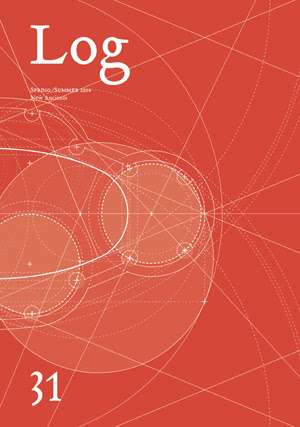
Log 31: New Ancients.
new york NEW YORK

Please join Log to celebrate the publication of the Spring/Summer 2014 issue, Log 31: New Ancients, guest-edited by Dora Epstein Jones and Bryony Roberts.

issue launch & discussion: Log 31: New Ancients, with Cynthia DAVIDSON, Dora EPSTEIN JONES, Bryony ROBERTS, Enrique WALKER, & more.
Thursday, 07/10
6.00 p.m. / Wood Auditorium
Columbia University
1172 Amsterdam Avenue
New York, NY 10027

[PURCHASE]

[MORE]

Michael KIPFER & Eric WONG, "Misfit Objects: Fat Guy in a Little Coat." Model.
philadelphia PENNSYLVANIA

University of Pennsylvania, PennDesign
critic: Tom WISCOMBE.
assistant instructor: Ryan MACYAUSKI.

suckerPUNCH: Describe your project.

Michael KIPFER & Eric WONG: Our project is executed with two chunky and strong figures: a large jack and a slightly manipulated cube.

[MORE]

Michael BELL & Craig BUCKLEY, eds., "Permanent Change: Plastics in Architecture and Engineering."
new york NEW YORK

Almost every industry in the world has benefited from the invention of plastics, but it is only in the recent past that they have begun to be appreciated as architectural materials in their own right. . . .

book launch & discussion: “Permanent Change: Plastics in Architecture and Engineering,” with Michael BELL, William CARROLL, George MIDDLETON, Billie FAIRCLOTH, & Sylvia LAVIN.
Tuesday, 07/01
6.00–8.00 p.m. / Center for Architecture
536 La Guardia Place
New York, NY 10012

[RSVP]

[MORE]