




Ads
Ads

Ads

Ads

Ads

Ads

Ads

Ads


  • Schistose Mirror
    brooklyn NEW YORK

    suckerPUNCH: Describe your project.

    Francis BITONTI: Francis Bitonti Studio produced the Schistose Mirror for the Intersections Symposium at the New York City College of Technology in June 2012. The different geometric organizations carved into the relief to produce a landscape of perceptual effects. The Mirror is CNC cut from high-density urethane foam and finished with a black automotive finish and can be produced in about two weeks time. The automotive finish produces a variety of effects across the surface. The reflective surface allows the onlookers to project themselves into the ephemeral landscape. The viewer becomes the project, integrating perception and form.

    [MORE]

  • TypoTieGraphy
    moscow RUSSIA

    suckerPUNCH: Describe your project.

    Eduard HAIMAN: This is the unfinished series of graphic work about new way of discovery letters. Basic question of project is how to make that symbols were not, but they emergence, and we can see them. Several algorithms were created which can use only ties between some points on the space for generate of alphabetical symbols. General restrictions are the not using contours, patches, spots, fields, pixels and so on. Ties make fields where condense clots which not the symbols but they designate presence them.

    [MORE]

  • Milieus and Algorithms
    boston MASSACHUSETTS

    suckerPUNCH: Describe your project.

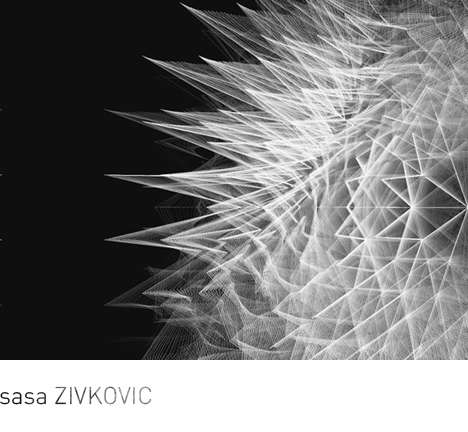
    sasa ZIVKOVIC: Milieus and Algorithms examines the relationship between geometry generating algorithms and algorithm controlling milieus. Processing, an open software project developed by Casey Reas and Ben Fry at MIT Media Lab is used to establish a set of rules for growth and expansion of geometries (algorithms) while at the same time allowing to constantly alter the conditions which determine how geometries grow in real time (milieus).

    [MORE]

  • non-optimal Structural Optimization [noSO]
    new york NEW YORK

    suckerPUNCH: Describe your project.

    alicia ALONSO, jared DIGANCI, & farzin LOTFI-JAM: Inspired by the Bi-directional Evolutionary Structural Optimization (BESO) algorithm developed by the Innovative Structures Group at RMIT University, this project explores a novel or not-quite-right approach to optimization. A series of forces is distributed through a virtual domain and the negotiation of these forces have been relentlessly interrogated for architectural opportunity. This has resulted in a rich palette of spatial conditions, formal languages and surface articulations.

    [MORE]

  • voxels
    zurich SWITZERLAND

    suckerPUNCH: describe your project.

    michael HANSMEYER: this project explores a procedural approach to generating volumetric form. thus, rather than working with surfaces this project uses volumetric cells - voxels- as its basic geometry. the voxels contain data that can interact with proximate voxels according to pre-established rules. this allows information to be propagated through the voxel space.

    [MORE]

  • depotart
    GERMANY

    suckerPUNCH: describe your project.

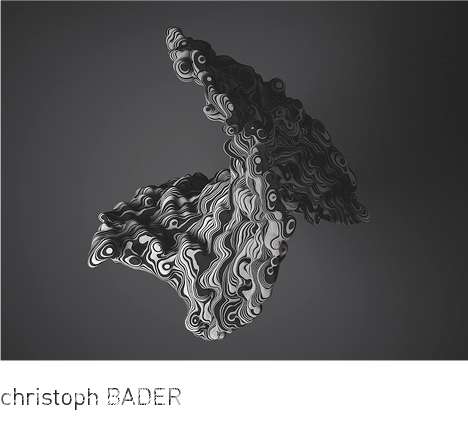
    christoph BADER: Most of my works are based on processes. First a process or a set of instructions is defined and then some variables within the process are varied to get different visual outcomes. These different result then form a series.

    [MORE]

  • PARAsite
    los angeles CALIFORNIA

    usc school of architecture is pleased to announce the launch of PARAsite. this blog has been set up as a forum for debate about recent developments within the usc school of architecture in the area of parametric and algorithmic design. parasite also serves as a repository of records of past events, such as the intensive fields conference held on 12 december 2009. full video documentation of this conference is now available.

    image credit: casey REAS, process 14 (image 3) 2008