



Ads
Ads

Ads

Ads

Ads

Ads

Ads

Ads


  • Taipei Herbal Baths and Aquatic Sports Centre
    london UNITED KINGDOM

    suckerPUNCH: Describe your project.

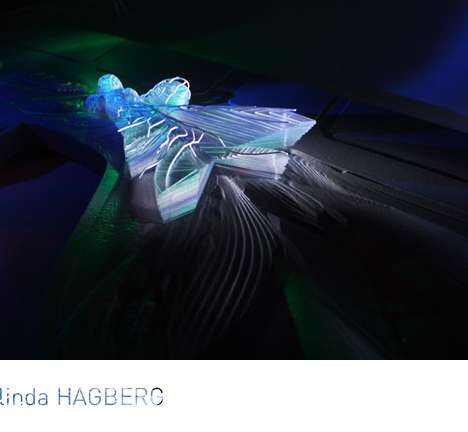
    linda HAGBERG: Sited in the area between the Danshui River and Taipei Main Station, Taipei Herbal Baths and Aquatic Sports Centre is inspired by an investigation into materials and how their properties change according to surrounding environment, particularly evident in wood and its change of shape due to humidity. The project explores the possibility of employing a materialistic approach to create a responsive space, an architecture of which ephemeral and sensorial qualities are constructed from environment and material.

    [MORE]

  • The LA forum and Library of Four Ecologies
    london UNITED KINGDOM

    suckerPUNCH: Describe your project.

    dave EDWARDS: For Mircea Eliade “The distinction between the sacred and the profane is that of a boundary or threshold. a boundary between the ordinary mundane and confused versus the security and sense of being that comes only via accessibility to the sacred.”

    The work centers on the notion of these two dialectic states, of the transition between the profane and the sacred. Initial studies began with a study into Dante’s Divine Comedy as a physical construction of the threshold between sacred spaces of Paradise and the Profane Inferno.

    [MORE]

  • aRC(2)himera
    london UNITED KINGDOM

    Bartlett UCL London, MArch Graduate Architectural Design (GAD), research cluster 2 (RC2)
    Advisor: Univ.-Prof.(IBK) Marjan Colletti PhD, Guan Lee, Tea Lim, Pavlos Fereos.

    In Greek mythology the Chimera was a monstrous fire-breathing creature. She had the body of a lioness, a tail ending in a snake’s head, and a goat’s head arising on her back at the centre of her spine. There are of course many other examples in different cultures that could also be referred to as Chimeras. In genetics, biology and botany a Chimera represents an animal or plant with genetically distinct cells from two different zygotes or genetically different types of tissue; the resulting organism is a mixture of tissues, and of different sets of chromosomes. In paleontology, it is a fossil reconstructed with parts from different animals.

    [MORE]

  • Reforming Taipei Main Station
    london UNITED KINGDOM

    suckerPUNCH: Describe your project.

    wendy teo BOON TING: The design speculates on the potential of researching other possible energy systems that could generate power for the train station. The ambition is to integrate the flow of energy and waste matter of these new systems, such as thermoelectric energy and bioreactors, with the built environment. It is intended that the flow of these new energy systems would be physically expressed in an ephemeral way, with a fluctuating presence that reflected the climatic and energetic changes of the station.

    [MORE]

  • Fragile
    london UNITED KINGDOM

    suckerPUNCH: Describe your project.

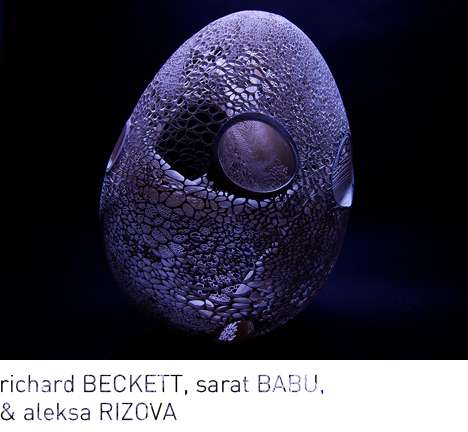
    richard BECKETT, sarat BABU, & aleksa RIZOVA: Constructed from less than 1kilogram of plastic, Fragile explores the delicate and the impossible. The project is inspired by the convergence between nature and technology which challenges the aesthetics and constructive methods of human structures and objects. Fragile is the result, a combination of biological minimalism inspired by natures structural efficiency and the fabrication of the impossible through the use of new Additive Layer Manufacturing processes which produce pieces of incredible complexity and detail that would be virtually impossible otherwise.

    [MORE]

  • HUGO
    vienna AUSTRIA

    suckerPUNCH: Describe your project.

    daniel MAYER & chris PRECHT: HUGO stands for human grown organism and is literally organic architecture. Having the current state of biology and science in mind with reconstructing and cloning body parts, generating second devices your body can connect with, or manipulating stem cells, lets one imagine how it could be influencial for architecture one day.

    [MORE]

  • Should buildings grow/adapt/repair themselves? And if so, why not?
    graz AUSTRIA

    Panel: “Should buildings grow/adapt/repair themselves? And if so, why not?”

    With: Peter Cook, Hans Frey, Urs Hirschberg, Peter Pakesch, & Wolfgang Tschapeller.
    Moderation: Marjan Colletti.

    Should buildings grow/adapt/repair themselves? And if so, why not?
    Wednesday, 05/09
    6.00 pm / HDA
    Haus der Architektur im Palais Thinnfeld
    Mariahilferstraße 2, 8020 Graz AUSTRIA

  • DraWearing
    bologna ITALY

    Professor: niccolò CASAS
    Students: federica SANGIORGI, lorena D’ALFONSO, carlotta BANDIERA, ella SAIDI, elena SETNIKAR

    suckerPUNCH: Describe your project.

    niccolò CASAS: The course of Tecniche di Modellazione Digitale at the Accademia di Belle Arti di Bologna leads students through the basis of Digital and Parametric Design. The course is part of the School of Product Design at the Accademia, a school highly interested in crossing boundaries of traditional design searching for the convergence of multidisciplinary approaches.

    [MORE]

  • Mo(o)nastery
    london UNITED KINGDOM

    LUNAR CRATER CULTURAL CENTER COMPETITION
    Honorable Mention — $100

    suckerPUNCH: Describe your project.

    dave EDWARDS: The project explores the speculative notion from two directions first speculating on the cultural behaviour of such an enterprise, asking questions like who would like on the moon? What and why would you go there. And how would this change humanities perception on itself. Would living on the moon lead to new forms of spirituality, new social structures or would we export our current ways of being which would be exposed in a completely new context.

    [MORE]

  • Comfort Confrontation
    vienna AUSTRIA

    suckerPUNCH: Describe your project.

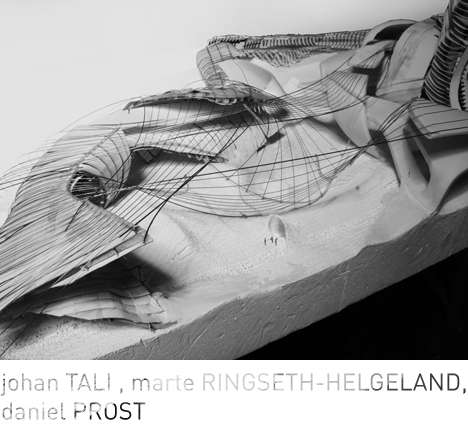
    johan TALI, marte RINGSETH-HELGELAND, daniel PROST: The project researches the possibilities of living in a desert environment, further more creating an off-grid self-sustainable university campus for 2500 students.

    The actual building mass is hovering above the desert surface and is used as an apparatus to organize the public space that is the desert itself. The endless sand horizon is considered as an open field, where shade, brightness and moisture are the variables to create a diverse public space. As the desert surface expands into the public buildings it becomes more shaded, creating a landscape of oasis like condition and manifests a forum condition for the academic buildings.

    [MORE]