




Immersive Kinematics is a Research Group at the University of Pennsylvania directed by professors Simon Kim and Mark Yim. This group is a collaboration between Penn Engineering and Penn Design and expands the roles of architecture and engineering focusing on integrating robotics, interaction, and embedded intelligence in our buildings, cities, and cultures. The group offers a class teaming architecture and engineering students in mechatronic projects.
-
suckerPUNCH: Describe your project.
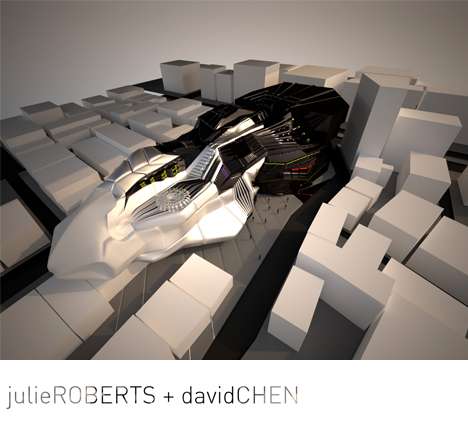
julie ROBERTS + david CHEN:The project’s primary goal is to develop an integrated technique and aesthetic sensibility through interior environments. Working from the inside out allows the potential to create and refine specific affects, which transform and differentiate according to their own internal logic. The design aims to reach an unprecedented level of designed luxury and intensities recalling the excessiveness of baroque or rococo interiors. Emphasis lies in the qualitative differentiation of components and part to whole relationships in terms of changing intensities in a continuous system.
Comments Off on tokyo club -
suckerPUNCH: describe your project.
han TANG: LABYRINTH is to try to map the non-linear evolution of dynamic spatial system in ecologically-based models. It reviews the self-organizing process by investigating in particular the relevance of chaos theory. The structure formation starts with a chaotic situation, and after long term evolution, a stable structure system emerges. It reflects the spaticial relationship between solid and void through time. Here, we argue that inherent randomness is a sufficient condition for the generation of ordered patterns under evolutionary dynamics.
Comments Off on labyrinth -
suckerPUNCH: describe your project.
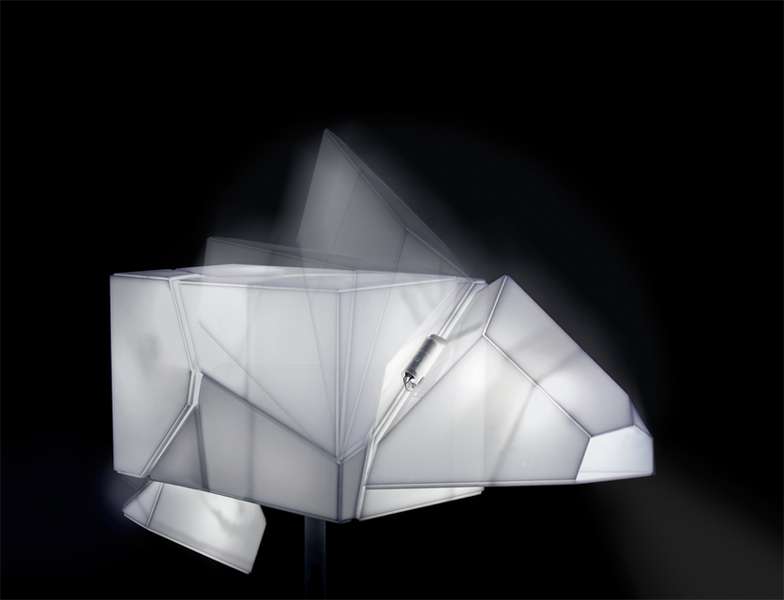
michael WETMORE & lucas SANJUAN : The course Advanced Mechatronic Reactive Spaces, a collaboration between architects and robotics engineers at the University of Pennsylvania, forms interdisciplinary teams that together design and build electro-mechanical reactive spaces. With an initial research task of fusing mechatronics and lighting design, we explored the potential of polyhedra for their transformative qualities. Using a Voronoi algorithm, we created a set of both fixed and motorized polyhedra. Interest in atmospheric affect led us to pursue the object as a transformative lighting element in which a user is given control over a reactive object and the space it inhabits. In its closed state, LED’s are focused inward resulting in an ambient object.
Comments Off on hedraLAMP -
suckerPUNCH: describe your project:
han TANG: tequila is to rethink the relationship between function and ornament in terms of interior design by incorporating stair, chandelier, and wall. on a local scale, each of these elements is carried out in a very programmatic and functional perspective in regards to its own utilization. each component changes in quality from close(solid) to open(skeleton) which adds to its variation. then by different connections, these components aggregate in a way that alternating through iteration and scale. different formation starts to emerge following those local rules through many iterations in the end.
-
suckerPUNCH: describe your project.
liwen MAO: this project finds potential geometries that arise within a swarm intelligence system. such bottom up systems can not only create global complex phenomena but also unexpected smaller scale forms and gives the designer more localized control within the system. the project uses curves negotiate between the hierarchies of ornament and structure based on local rules. the advantage of this methodology of form finding is that it can break the limit of human imagination and create unlimited yet reasonable forms by changing specific parameters.
-
suckerPUNCH: describe your project.
johnny LIN, david ETTINGER, + adam FENNER: the project develops a fluid architectural language in concert with radical structural and mechanical systems, space and mechanisms co-evolve. while developing a coherent fusion with a diversified landscape, the fluidity of the architectural form also comes into a relationship with the fluidity of the interiorized environmental conditions. literal mass runs in parallel to thermal mass. the radical pragmatics of the building systems simultaneously operates as the spectacle of the casino. mechanized bladders expand and contract with the daily fluctuations of atmospheric pressure at the site. allowing the building to inhale and exhale once per day. in addition to developing controlled environments through alternative means, the micro climates extend the range of sensations to the extremes of experience.
-
suckerPUNCH: describe your project.
wei WANG: this urban club at lower manhattan is aimed to provide extraordinary leisure experience by designing complex yet designated interior space. the notion of interiority suggests the elaboration of tectonic systems that unfold and differentiate within the terms of their own internal logic. i am interested in developing complex, layered and highly differentiated tectonic systems that can start to compete with the best historical examples in terms of their richness, coherency and precision of formal organization. a multi-layered complexity has been built up with a high degree of lawful differentiation within each system and with a high level of correlation between the various subsystems that constitute the overall tectonic continuity.
Comments Off on urban club -
suckerPUNCH: describe your project.
joshua FREESE, shuni FENG, + jeffrey s NESBIT: our research examines and explores a variety of organizational operations in biology and architecture by studying the scale-free networks that define order and relationships in global systems. these network systems, like those in the biological model being studied, rely on managing complexity by sharing simple organizing principles that govern behavior at all scales.
university of pennsylvania, instructors: jenny SABIN + peter lloyd JONES
Comments Off on networking- angiogenesis -
suckerPUNCH: describe your project.
kyu HO CHUN/david ETTINGER/alan SONG-CHING TAI: this project explores the generation of complex topologies through the self-organization of program. a multi-agent design methodology was created to generate a stigmergic interaction of agents seeded with programmatic intent. the project was developed within the complex phenomena research studio that explores non-linear algorithmic design methodologies, directed by cecil balmond and roland snooks.
architecture, kokkugia, penn design, roland SNOOKS
Comments Off on center for non-linear research