






zurich SWITZERLAND
suckerPUNCH: Describe your project.
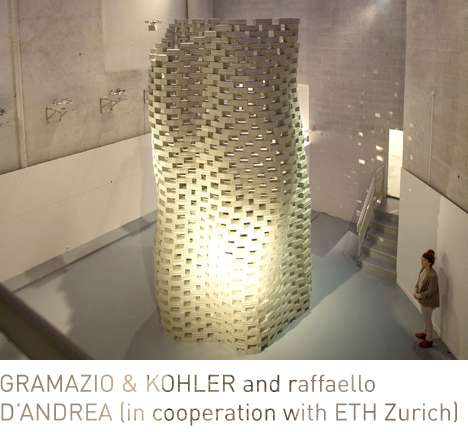
GRAMAZIO & KOHLER: Flight Assembled Architecture is the first installation to be built by flying machines. Conceived as an architectural structure at a scale of a 600m high “vertical village”, the installation addresses radical new ways of thinking and materializing architecture as a physical process of dynamic formation. Here, a multitude of mobile agents working in parallel and acting together as scalable production means. Those are programmed to interact, lift, transport and assemble small modules in order to erect a building structure that synthesizes a rigorous architectural approach and a visionary autonomous system design.
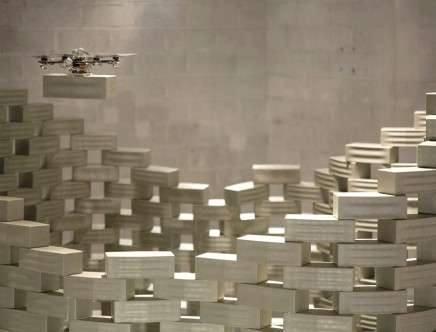
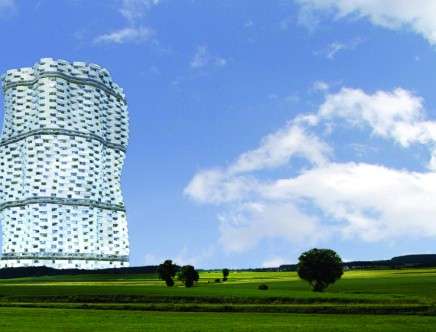
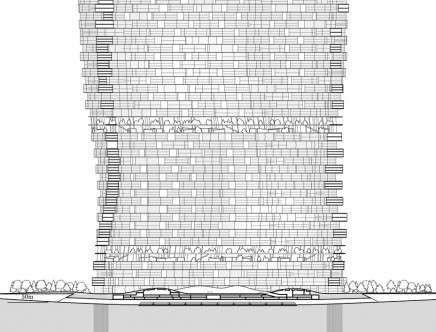
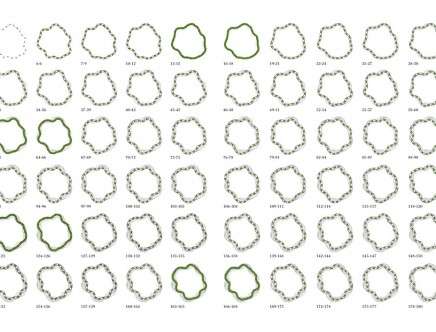
Following an initial phase lasting several days and dedicated to the assembly by flying machines of a model standing 6m high and 3.5m in diameter—made up of 1500 prefabricated polystyrene foam modules—the exhibition will feature a “megastructure” in its completed form, along with a film documenting the airborne assembly and all aspects of the exhibition. The project is the first collaborative project by Gramazio & Kohler and Raffaello D’Andrea and will be exclusively exhibited at the FRAC Centre, Orléans.
sP: What or who influenced this project?
G & K: Personally, Fabio Gramazio and Matthias Kohler lived out their passion in young years by building, flying (and crashing) remote controlled planes, also by designing and programming a computer game where the mission was to pilot a helicopter, and later on, Matthias Kohler was even paragliding the Swiss mountains during his architectural studies. When starting their research on robotically controlled assemblies at the ETH Zurich, they were speculating from the very beginning about building by helicopter while brainstorming about the future of building in general. While this idea was certainly too speculative to be at the forefront of their own research agenda focusing on 1:1 robotically fabricated constructions, they were more than happy to meet Raffaello D’Andrea who is also professor at the ETH Zurich and researches on flying vehicles in the field of autonomous system design and algorithms. And indeed, an inspection of some of Raffaello D’Andrea’s projects exposes an underlying theme of assembly, for instance he developed a voice controlled robotic crane, when he was still an undergraduate student at the University of Toronto or even more spectacular: Raffaello D’Andrea’s Robotic Chair—an everyday looking chair that collapses to the floor and falls apart into six separate pieces, and then proceeds to reassemble itself without human intervention (developed with artists Max Dean and Matt Donovan). In this regard, a part of Raffaello D’Andrea seems always looking for new ways to express this innate desire to build. This is also true for one of his latest projects, the Distributed Flight Array—a collection of self-propelled vehicles that find each other on the ground, interconnect, and then coordinate their actions to take flight as one rigid unit, again without human intervention—with Ph.D. student Raymond Oung and the rest of his team at ETH Zurich. Thus it is not surprising that when Raffaello D’Andrea and Gramazio & Kohler met in 2010 they were immediately touched by their common interests, especially that of the paradox connection of flying and building. When Gramazio & Kohler received the invitation of the FRAC Centre Orléans to do an exhibition and produce a piece for their collection, they immediately called up Raffaello D’Andrea. It thus didn’t take long for them to put all the pieces together and to come up with the concept of Flight Assembled Architecture, in order to make their shared vision a reality.
Additional credits or links:
Project Conception and Project Lead: Matthias Kohler, Fabio Gramazio, Raffaello D’Andrea
Project Management: Andrea Kondziela, Cason Male
Architectural Project: Matthias Kohler, Fabio Gramazio, Ralph Bärtschi, Thomas Cadalbert, Marion Ott, Peter Heckeroth, Andrea Kondziela, Jan Willmann
Flight Assembly: Raffaello D’Andrea, Federico Augugliaro, Marc Corzillius, Mike Hamer, Markus Hehn, Sergei Lupashin, Cason Male, Mark Muller, Igor Thommen
Exhibition Design: Andrea Kondziela, Marion Ott, Carolina Flores, Peter Heckeroth, Dominik Weber
Exhibition Photography: François Lauginie, Peter Heckeroth
Exhibition Filming: Tim Burton, Peter Heckeroth
Structural Engineering: Dr. Lüchinger+Meyer Bauingenieure AG, Daniel Meyer, Marco Devigili
Façade Engineering: Dr. Lüchinger+Meyer Bauingenieure AG, Daniel Meyer, Philippe Willareth
Energy Consulting: Amstein + Walthert AG, Adrian Altenburger, Stefan Brücker
Wind Tunnel Testing: Chair of Building Physics, ETH Zurich and Empa, Jan Carmeliet, Peter Moonen, Enrico Paterna
Supported by:
FRAC Centre
Pro Helvetia Swiss Arts Council
Centre culturel suisse, Paris
Vicon Motion Systems
JET Schaumstoff - Formteile GmbH
Further Project Support:
Institute for Dynamic Systems and Control, ETH Zurich: Angela Schoellig, Katharina Munz, Markus Waibel
Department of Architecture, ETH Zurich: Sacha Menz, Zeljko Medved, Michèle Rüegg Hormes
Corporate Communications, ETH Zurich: Franziska Schmid
Institute of Structural Engineering/HIF-Hall, ETH Zurich: Dominik Werne and Team
Photos:
— Architecture: Picture by Gramazio & Kohler (c) 2011
—Installation: Picture by Gramazio & Kohler and IDSC (c) 2011
—Robotics: Picture by IDSC (c) 2011
—General: Picture by Gramazio & Kohler and IDSC (c) 2011



May 22nd, 2012 at 10:40 pm
[...] suckerPUNCH » Flight Assembled Architecture [...]