




Kick us! Only five days left to support suckerPUNCH’s exhibition at Land of Tomorrow Gallery! Also to come is a catalogue featuring interviews and original writings by an amazing cast of architectural educators—all alongside some of the best student work from 2011. Click through for more information, to see the contributors, and to lend your support!
-
Comments Off on KICK US!
-
We’re happy to announce the finalists of the Exhibition Competition! The three finalists which each have a portion of their project prototypes by PR&vD. There are also 6 projects that received votes from the jury so they will be in the exhibition as the “jury selection.” We’d like to thank PR&vD and LoT for partnering up in this exciting project and to thank our fantastic jury — Greg Lynn, Hernan Diaz Alonso, Michael Speaks, Aaron Betsky, Tom Wiscombe, and Mark Gage. The projects are posted here with some of the jury comments.
finalists ///
ivan BERNAL; ji-young YOON; and donovan BALLANTYNE
jury selection ///
paul MECOMBER; christopher SAVANELLI & ivan OSTAPENKO; carla LORES + michael YARINSKY; jon BAILEY; jessica DOVLETIAN & wenny HSU; and mengyi FAN & joseph JUSTUSsuckerPUNCH + Land of Tomorrow, suckerPUNCH + Land of Tomorrow exhibition
Comments Off on suckerPUNCH + LoT Finalists -
[JURY SELECTION]
Columbia University GSAPP
critic: francois ROCHE with ezio BLASETTIsuckerPUNCH: Describe your project.
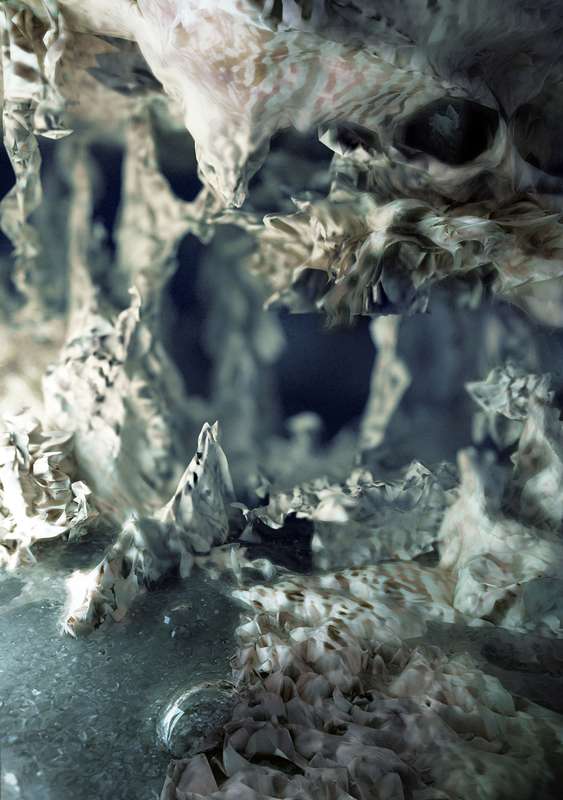
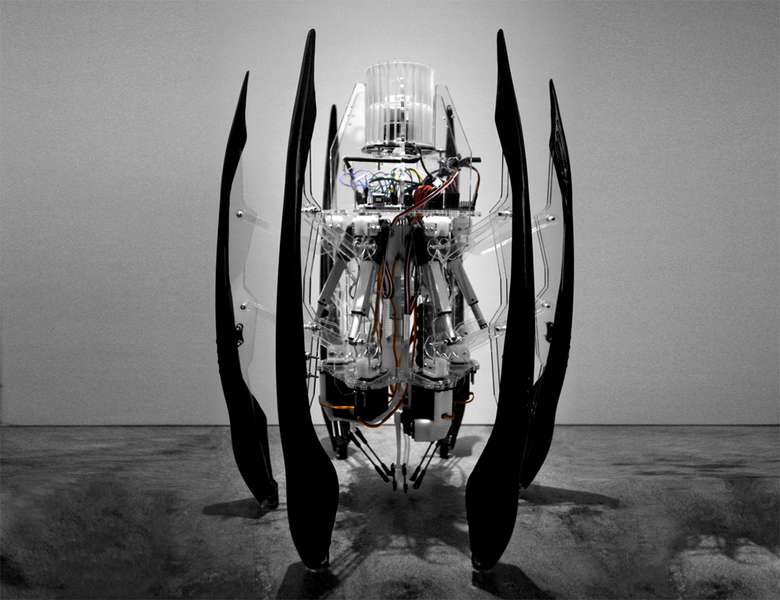
mengyi FAN & joseph JUSTUS: The scenario describes a structure that grew out from the ocean—facing a progressive rising of water as its colonizers struggle to maintain an equilibrium. It is forever undergoing constant repair as it struggles to stay afloat—supported only by a system of mechanic agents who supply it with the necessary substances and means to create inhabitable grottoes. Without this ongoing system, the structure would easily collapse, returning back to the depths of the ocean from which it has once risen.
architecture, columbia GSAPP, Columbia University GSAPP, ezio BLASETTI, francois ROCHE, suckerPUNCH + Land of Tomorrow exhibition
Comments Off on Acqua Alta2 -
Cal Poly, San Luis Obispo
critic: stephen PHILLIPSsuckerPUNCH: Describe your project.
brian HARMS: My thesis Involved the reconsideration of the role of robotic technology within the factory. The project is a flexible robotic manufacturing plant located at the edge of the Port of Los Angeles adjacent to San Pedro. It aims to rethink/reconfigure/redesign this production-oriented technology in a way that allows the factory’s program, atmosphere, and physical presence to be constantly renegotiated by the same technology it houses.
-
Texas A&M University
critic: gabriel ESQUIVELTeam: Matt MILLER, Dale FENTON, Emau VEGA, Aubrie DAMRON, Adrian CORTEZ
Photos: Emau VEGATexas A&M University FabLab, Gabriel ESQUIVEL: The project began as a performative wall system that reacted differently to exterior and interior spaces. We realized we had to confront the fact we had two different surface logics, so rather than trying to blend these conditions, we decided to emphasize the difference indicating two current design directions. This resulted in two polar opposite geometries with opposite personalities that strongly defined exteriority and interiority.
-
[EXHIBITION FINALIST]
SCI-Arc
critic: elena MANFERDINIsuckerPUNCH: Describe your project.
donovan BALLANTYNE: By amplifying the tessellation and porosity of the geodesic dome I am giving the geodesic dome a face-lift.
This thesis looks to misconstrue the face of the geodesic dome by amplifying its unintentional, yet inherent esthetic, and monumental qualities. I am proposing to bring depth and discontinuity to a typology that has been about continuity and surface. A face with no ears, no eyes, and no nose is not a face. Similarly, a building with no face is not architecture.
-
The Ohio State University, Knowlton School of Architecture
critic: lisa TILDERsuckerPUNCH: Describe your project.
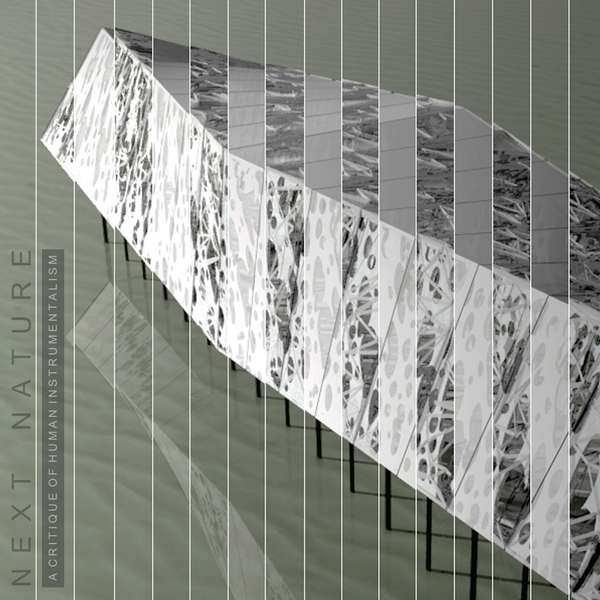
megan danielle DIXON: As multiple coastal cities anticipate the future impact of rising sea levels, many seek to continue technological interventions as if to reverse the role these cities have had on climate change. Various strategies of migration, replacement and protection, or “riding it out” have been proposed for the imminent sea level rise. In relation to these concerns, Next Nature suggests a new strategy of “Evolution.”
-
[EXHIBITION FINALIST]
SCI-Arc
critic: hernan diaz ALONSOsuckerPUNCH: Describe your project
ivan BERNAL: Familiar Primitives. This thesis uses familiar primitives and operations among them to generate complex spatial systems that retain a high level of formal legibility and clarity. Throughout history primitives have been used as an expression of monumentality, religiousness or even utopian dreams. They carry an intrinsic value and formal expectancy that can be used to capture its users. Since childhood we have been playing with this basic shapes creating a predisposition to them, we have experienced them, and we know what to expect.
-
[JURY SELECTION]
SCI-Arc
critic: andrew ZAGOsuckerPUNCH: Describe your project.
paul MECOMBER: The Whitney Museum, by architect Marcel Breuer, is an iconic cultural artifact of New York City, and serves as the identity of the institution of the museum itself. This identity has been thrown into a state of turmoil as a result of plans to relocate from Madison Avenue to the southern terminal end of the Highline Park. Seeing this as an opportunity, this project seeks to re-imagine the problems associated with iconic identity in museum design by twining Breuer’s Whitney on the new Highline site.
-
[EXHIBITION FINALIST]
Yale University SOA
critic: greg LYNN & brennan BUCKsuckerPUNCH: Describe your project.
ji-young YOON: This is an advanced studio project from Yale School of Architecture. The goal of this project was to explore the hypostyle hall as a new typology for high speed rail stations capable of connecting the space of the station to the existing city fabric. The site for this project was Los Angeles, California.