

Ads
Ads

Ads

Ads

Ads

Ads

Ads

Ads


  • Alain BADIOU, Cinema.
    2013

    For Alain Badiou, films think, and it is the task of the philosopher to transcribe that thinking. What is the subject to which the film gives expressive form? This is the question that lies at the heart of Badiou’s account of cinema. He contends that cinema is an art form that bears witness to the Other and renders human presence visible, thus testifying to the universal value of human existence and human freedom. . . .

    [MORE]

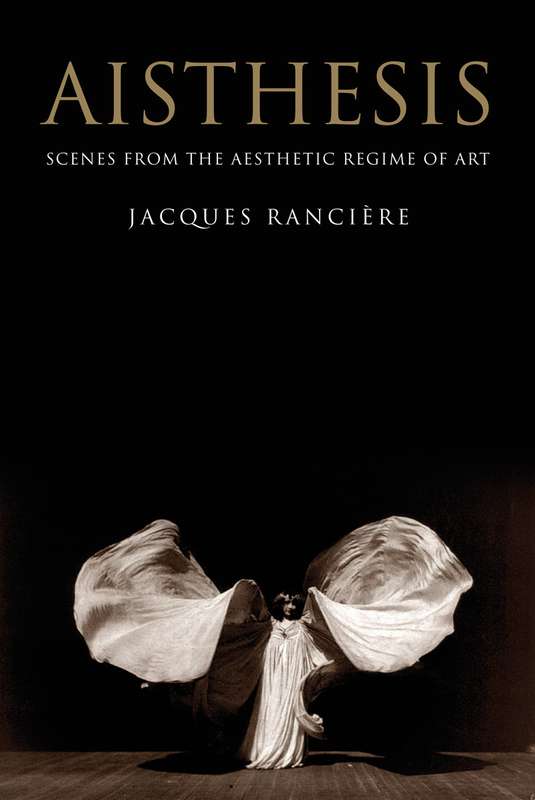
  • Jacques RANCIÈRE, Aisthesis.
    2013

    Composed in a series of scenes, Aisthesis—Rancière’s definitive statement on the aesthetic—takes its reader from Dresden in 1764 to New York in 1941. Along the way, we view the Belvedere Torso with Winckelmann, accompany Hegel to the museum and Mallarmé to the Folies-Bergère, attend a lecture by Emerson, visit exhibitions in Paris and New York, factories in Berlin, and film sets in Moscow and Hollywood.

    [MORE]

  • Graham HARMAN, Weird Realism: Lovecraft and Philosophy.
    2012

    As Hölderlin was to Martin Heidegger and Mallarmé to Jacques Derrida, so is H.P. Lovecraft to the Speculative Realist philosophers. Lovecraft was one of the brightest stars of the horror and science fiction magazines, but died in poverty and relative obscurity in the 1930s. . . . The impact of Lovecraft on philosophy has been building for more than a decade.

    [MORE]

  • Ian BOGOST, Alien Phenomenology, or What It’s Like to Be a Thing.
    2012

    Humanity has sat at the center of philosophical thinking for too long. The recent advent of environmental philosophy and posthuman studies has widened our scope of inquiry to include ecosystems, animals, & artificial intelligence. Yet the vast majority of the stuff in our universe . . . remains beyond serious philosophical concern. In Alien Phenomenology, Ian Bogost develops an object-oriented ontology that puts things at the center of being. . . .

    [MORE]

  • Shane CARRUTH (dir.), Upstream Color.
    2013

    A woman (Amy Seimetz) is abducted and hypnotized with an organic material harvested from a specific flower. When she falls for a man (Shane Carruth) the two come to realize he may also have been subjected to the same process. They search urgently for a place of safety within each other and struggle to assemble the fragments of their wrecked lives, unknowingly drawn into the life cycle of a presence that permeates the microscopic world . . .

    [MORE]

  • Log 28: Stocktaking
    new york NEW YORK

    What is the state of architecture today? Guest edited by architect Peter Eisenman and historian Anthony Vidler, Log 28: Stocktaking features interviews conducted by the editors to assess the current conditions of architectural practice, pedagogy, theory, and criticism. Includes Preston Scott Cohen, Greg Lynn, Patrik Schumacher, Lydia Kallipoliti, Alejandro Zaero Polo, and Jeff Kipnis.

  • A New Sculpturalism
    los angeles CALIFORNIA

    A New Sculpturalism: Contemporary Architecture from Southern California examines contemporary Southern California architecture from 1987 to the present, exploring its experimental nature, sculptural tendency, and exciting evolution. Contributions by leading architectural historians coupled with a stunning collection of images present recent works in terms of sculpturalism and urbanism, and consider the impact of the history and environment of Los Angeles, as well as the creative and working processes.