




Ads
Ads

Ads

Ads

Ads

Ads

Ads

Ads


  • Bi-Polar
    college station TEXAS

    Texas A&M University
    critic: gabriel ESQUIVEL

    Team: Matt MILLER, Dale FENTON, Emau VEGA, Aubrie DAMRON, Adrian CORTEZ
    Photos: Emau VEGA

    Texas A&M University FabLab, Gabriel ESQUIVEL: The project began as a performative wall system that reacted differently to exterior and interior spaces. We realized we had to confront the fact we had two different surface logics, so rather than trying to blend these conditions, we decided to emphasize the difference indicating two current design directions. This resulted in two polar opposite geometries with opposite personalities that strongly defined exteriority and interiority.

    [MORE]

  • (a) Ball
    los angeles CALIFORNIA

    [EXHIBITION FINALIST]

    SCI-Arc
    critic: elena MANFERDINI

    suckerPUNCH: Describe your project.

    donovan BALLANTYNE: By amplifying the tessellation and porosity of the geodesic dome I am giving the geodesic dome a face-lift.

    This thesis looks to misconstrue the face of the geodesic dome by amplifying its unintentional, yet inherent esthetic, and monumental qualities. I am proposing to bring depth and discontinuity to a typology that has been about continuity and surface. A face with no ears, no eyes, and no nose is not a face. Similarly, a building with no face is not architecture.

    [MORE]

  • Tiling within Tiling
    los angeles CALIFORNIA

    SCI-Arc
    critic: tom WISCOMBE

    suckerPUNCH: Describe your project.

    cheng GONG & kiem HO: In researching scripted panelizing systems, we sought a script that would maximize our control of the parameters & visual/spatial effects without sacrificing variation and complexity. We rejected typical gradient controls of varying opening patches of different panel types could vary & adapt as abrupt as necessary. We favored scripts that allowed us to build in a higher level of variation while also creating vague, unpredictable relationships between a large multitude of panels.

    [MORE]

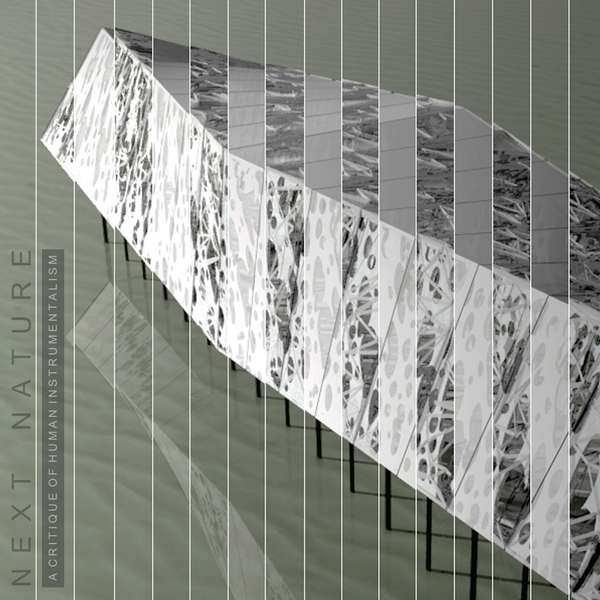
  • Next Nature : A Critique of Human Instrumentalism
    columbus OHIO

    The Ohio State University, Knowlton School of Architecture
    critic: lisa TILDER

    suckerPUNCH: Describe your project.

    megan danielle DIXON: As multiple coastal cities anticipate the future impact of rising sea levels, many seek to continue technological interventions as if to reverse the role these cities have had on climate change. Various strategies of migration, replacement and protection, or “riding it out” have been proposed for the imminent sea level rise. In relation to these concerns, Next Nature suggests a new strategy of “Evolution.”

    [MORE]

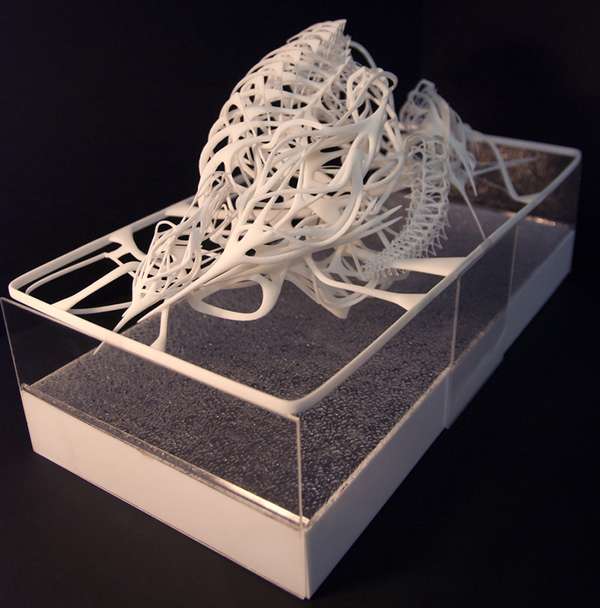
  • Intricate Density

    los angeles CALIFORNIA

    SCI-Arc
    critic: andrew ATWOOD

    suckerPUNCH: Describe your project.

    jae hwan LEE & daniel cheng LEE: It is understood that cities and buildings are largely shaped by a dynamic flow of interrelated cultural, social, political and economic forces—the nature of possible interfaces between architecture and its various settings within the contemporary city. Rather, our proposal is a reinterpretation of how a building may deal with architecture on an urban scale.

    [MORE]

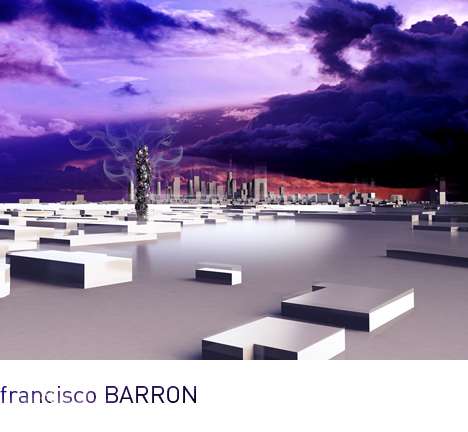
  • Flexing and Easing Boundaries: Prepossessing Vernon
    los angeles CALIFORNIA

    SCI-Arc
    critic: andrew ATWOOD

    suckerPUNCH: Describe your project.

    francisco BARRON: Architecture is facing a crisis; its identity is a mist. Its obligation to the social, cultural, and political aspects of humanity are at stake. Architectures influence on the community is unavoidable, and its presence can always be questionable. Architecture is being shaped by numerous processes- some that often fall short due to insubstantial aesthetic, geometrical, and intellectual integrities.

    [MORE]

  • Familiar Primitives
    los angeles CALIFORNIA

    [EXHIBITION FINALIST]

    SCI-Arc
    critic: hernan diaz ALONSO

    suckerPUNCH: Describe your project

    ivan BERNAL: Familiar Primitives. This thesis uses familiar primitives and operations among them to generate complex spatial systems that retain a high level of formal legibility and clarity. Throughout history primitives have been used as an expression of monumentality, religiousness or even utopian dreams. They carry an intrinsic value and formal expectancy that can be used to capture its users. Since childhood we have been playing with this basic shapes creating a predisposition to them, we have experienced them, and we know what to expect.

    [MORE]

  • Network Biennale
    santa monica CALIFORNIA

    Cal Poly, San Luis Obispo
    critic: stephen PHILLIPS

    suckerPUNCH: Describe your project.

    nema ASHJAEE: This biennale in downtown LA expresses the modern Network Culture on multiple levels. Aside from its obvious network morphology, the structure itself is conceived from a bottom-up methodology that builds an open framework to accept event and display spaces. Network Culture’s temporal nature is further expressed in the temporary structure as it reconfigures every two years to accommodate a new organization of spaces.

    [MORE]

  • America’s Cup Pavilion
    cambridge MASSACHUSETTS

    Harvard GSD
    critic: lisa IWAMOTO & craig SCOTT, visiting critics

    suckerPUNCH: Describe your project.

    paul CATTANEO: The America’s Cup Pavilion, designed for the America’s Cup Yacht Race to take place throughout 2012, is a design deploying the characteristics of folded plate structural geometries to re-form a site – here specifically Piers 27/29 in San Francisco – in structural efficiency experimentation at a variety of scales, and was designed for a Harvard GSD Option Studio led by Lisa Iwamoto and Craig Scott of IwamotoScott Architecture.

    [MORE]

  • Augmented Reality Pavilion
    san francsico CALIFORNIA

    Academy of Art University
    critic: kory BIEG

    suckerPUNCH: Describe your project.

    yao GAO: Reality Investigating the relationship between humans and the built environment when the virtual, real, and augmented realities of our world collide. As a temporary pavilion the intensity and frequency of visitors drawn to the site will amplify the extreme spaces and force the occupants to question what is real.

    [MORE]