


Ads
Ads

Ads

Ads

Ads

Ads

Ads

Ads

Ads

Ads


  • philadelphia PENNSYLVANIA

    University of Pennsylvania, PennDesign
    critic: Ali RAHIM

    suckerPUNCH: Describe your project.

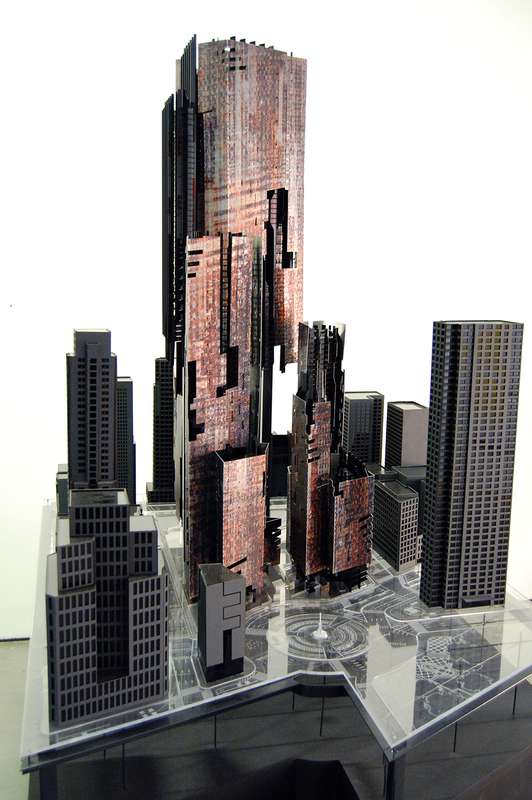
    Yoonsun HWANG & Lois SOO KYUNG SUH: Hydropolis provokes the existing typology of a skyscraper set in the densest metropolis: Hong Kong. Accumulating diverse attributes of the city at multiple economic and social scales and translations, the tower yields transforming facade, structure and circulation system, from intricate to ludicrous. The project challenges the aggressive attitude of land reclamation by embracing the harbor front as a crucial part of the project, operating closely with water.

    [MORE]

  • New Atlantis (a city for voluntary exiles)
    brooklyn NEW YORK

    suckerPUNCH: Describe your project.

    Adam DAYEM: The year is 2100 and what was once called the nation of Kiribati is gone, its chains of low-lying islands have been completely submerged by the Pacific Ocean. Many I-Kiribati and their descendants have dispersed to Australia where they work in the health care industry or to New Zealand where they work as maritime shipping specialists. In these host nations, the I-Kiribati have become diffused. As a result, their culture and language has nearly died.

    [MORE]

  • Overlapping Geometries
    troy NEW YORK

    Rensselaer Polytechnic Institute (RPI)
    critic: Brian de LUNA

    suckerPUNCH: Describe your project.

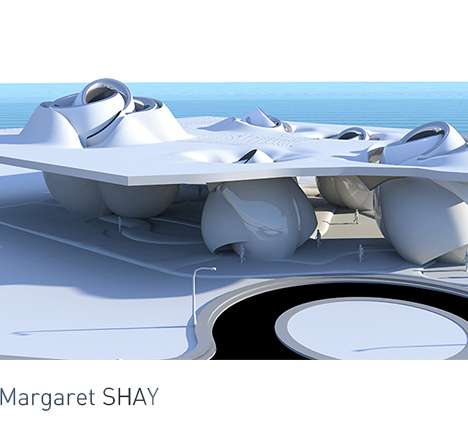
    Margaret SHAY: My work on the topic “interior envelopes” set forth by our professor began with the study of the plan of Christopher Wren’s unbuilt version of Saint Paul’s cathedral. Through my studies, I extracted the pure geometries that were driving the plan and began calling out the new geometries that resulted due to overlapping, and also exploring those new geometries in three dimensions.

    [MORE]

  • MoCA: Surface-to-Volume
    los angeles CALIFORNIA

    CONCEPT ///
    This project is a sixteen foot high inhabitable pavilion which will be exhibited in The New Sculpturalism show at the MoCA Geffen Contemporary in Los Angeles, opening June 1, 2013. It was chosen in an invited competition held by the Museum last summer, and now the heat is on to realize it.

    The project is a study of surface-to-volume transformations, where mass is achieved by pushing into a surface like a fist through a rubber sheet. In this case, chunky objects are pushed into exterior skins, creating volumetric effects on the interior. The perimeter edges of the three components of the piece are razor-thin, creating visual tension between the realms of 2-D/flat and 3-D/massive.

    [SUPPORT]

    [MORE]

  • Contemporary Vernacular
    los angeles CALIFORNIA

    Southern California Institute of Architecture (SCI-Arc)
    advisor: Hernan DIAZ ALONSO

    suckerPUNCH: Describe your project.

    Jason ORBE-SMITH: This thesis examines elements of vernacular architecture as a means to influence and generate contemporary form.

    As society moves towards a state of interconnectivity, heterogeneity and the globalization of politics, culture and economy, this thesis reinvestigates the discussion concerning the native, indigenous and local with notions of the cosmopolitan, global and foreign.

    [MORE]

  • (A)voiding Figuration
    los angeles CALIFORNIA

    SCI-Arc
    advisors: Dwayne OYLER & Volkan ALKANOGLU

    suckerPUNCH: Describe your project.

    Jacques LESEC & Sean MARKLE: Our thesis investigates the perception of figuration and void within acomplex field condition. The strategies we have employed oscillatebetween the 2-D and 3-D as a means of augmenting the legibility ofvolume and other times subverting this perceptual reading.

    [MORE]

  • Brain Technology Center
    vienna AUSTRIA

    University of Applied Arts Vienna, studio LYNN
    critic: Greg LYNN

    suckerPUNCH: Describe your project.

    Vojtech GERYK: The project, “Brain Technology Centre,” is an experimental research center dealing with neuroscience. The project aims to create an interactive learning environment that offers a way to improve or regenerate brain activity. The project with its own focus should build on existing research centers around, which have been involved in neurosurgery and neuroscience.

    [MORE]

  • PATCH I LINK I SUTURE: Re-Envisioning Los Angeles: From Pattern to Form
    los angeles CALIFORNIA & new york NEW YORK

    SCI-Arc Future Initiatives (SCIFI)
    critics: Peter ZELLNER & Alfonso MEDINA

    suckerPUNCH: Describe your project.

    Duygun INAL: Cities have never been singular entities as they do have molecular compositions based on interactions in between diverse & active constellations that unite to co-habit the city. Looking at the urban pattern of LA, the project takes on the idea of map figurations and a different position towards densifying Los Angeles. Rather than ideal & existing forms with closed shapes, rigid boundaries and defined figures, the basic building blocks have irregular shapes with maximized porosity within the field.

    [MORE]

  • Normative Fluidity
    troy NEW YORK

    Rensselaer Polytechnic Institute
    Critic: Andrew SAUNDERS

    suckerPUNCH: Describe your project.

    Graham BILLINGS: “Normative Fluidity” is a museum extension that explores the process of transposition between a series of light studies, diagrammatic implications of the “affect,” and their resultant three-dimensional forms and spaces. Diffraction of light through water is known as caustics; a process that was coupled with a camera obscura during my initial research.

    [MORE]

  • nMAC – ACCA Buenos Aires Competition
    lexington KENTUCKY

    suckerPUNCH: Describe your project.

    PLUS-SUM (Martin SUMMERS): Museums represent our greatest cultural and social aspirations in their mission to collect and disseminate ideas while also striving for symbolic status within global cultural and national/local, shared aspirations. A Museum of Contemporary Art has a particularly elevated status within this shared cultural milieu, because it embodies our aspirations to shape and evolve culture. It collects and defines the edges of our cultural production and at it’s best, reflects the current and future states of our collective evolution.

    [MORE]