



Ads
Ads

Ads

Ads

Ads

Ads

Ads

Ads


  • Turbulence Grid
    los angeles CALIFORNIA

    SCI-Arc
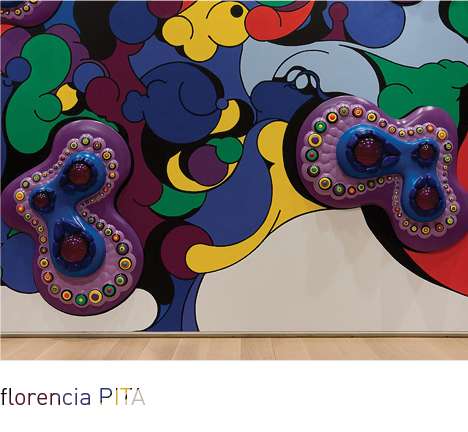
    critic: florencia PITA

    suckerPUNCH: Describe your project.

    HAO jiang & JIARUI liu: The project is about creating a new type of grid for the program of hotel and theater. Turbulence is introduced here as a fluid dynamic grid. Different from traditional homogeneous grid, it is radiant, including quiet center, low momentum diffusion, high momentum convection, and rapid variation of pressure and velocity.

    [MORE]

  • Slim Verticality: a graphic massing
    los angeles CALIFORNIA

    SCI-Arc
    advisor: florencia PITA

    suckerPUNCH: Describe your project.

    daniel ALAJAJIAN: Imagery plays a major role in the Los Angeles landscape. It is a rapidly growing presence across various mediums. Buildings and images collide on a daily basis in the form of billboards, advertisements, graffiti, visual projections and video.

    Architectural designs, such as Robert Venturi’s Decorated Shed, study the separation of the sign and the building, ultimately exploring the relationship between the sign and the buildings’ context.

    [MORE]

  • Soft Boiled
    los angeles CALIFORNIA

    SCI-Arc Undergraduate Thesis
    Advisor: florencia PITA

    suckerPUNCH: Describe your project.

    emmy MARUTA: This thesis seeks “twoness” through defining notions of soft and hard. The “Soft” and “Hard” can vary characteristically from the visible to invisible. The intimate friction between the two mediums produces twoness that creates an environment that extends beyond the surface.

    [MORE]

  • Ground the Underground
    los angeles CALIFORNIA

    suckerPUNCH: Describe your project.
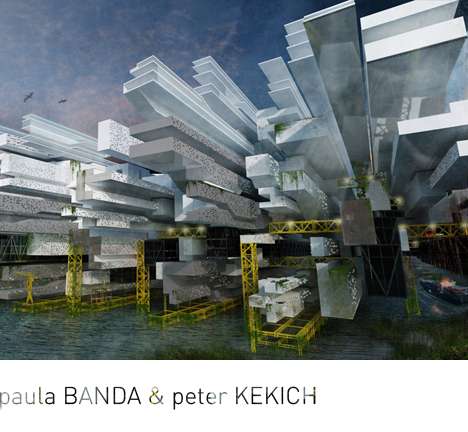
    paula BANDA & peter KEKICH: Our thesis will rectify the disconnection between the natural and artificial datum of the ground as an attempt to utilize infrastructure as an interdependent element, which shifts and unifies the urban fabric.

    [MORE]

  • kaohsiung ferry port terminal
    TAIWAN

    suckerPUNCH: describe your project.

    florencia PITA: The Ferry Port Terminal is a building arranged as a block, the block that defines the building’s boundaries form an enclosure that is penetrated by a number of objects. Sixteen large skylights perforate the surface of this block; they not only distribute the light to the lower levels but also act as structural artifacts. The top surface of this block is designed as a landscape, one that is populated by the engorged cones of the skylights and also by the unique volumes of the three towers. This landscape is the connecting tissue for the towers and also an urban field for the city.

    [MORE]

  • cronopios
    chicago ILLINOIS

    suckerPUNCH: describe your project.

    florencia PITA: The name Cronopios originates from a character in the book ‘Stories of Cronopios and Fames’ (1962) by Argentine writer Julio Cortazar. The ‘Cronopios’ are described as unique characters; they are naïve, unconventional and sensitive creatures with lush imaginations. Cortazar depicts them in short vignette-proclamations that have an air of surrealist fairy-fragments, with stories such as: ‘Instructions on how to climb a staircase’ and ‘Turtles and Cronopios’ that chronicle exhilarating yet casual events.

    [MORE]

  • pita
    ann arbor MICHIGAN

    florencia PITA
    Friday 11 March
    6.30pm / A+A Auditorium
    A. Alfred Taubman College of Architecture and Urban Planning
    University of Michigan
    2000 Bonisteel Boulevard
    Ann Arbor, MI 48109

  • detail & hue
    lund SWEDEN

    academy: DEPARTMENT OF THEORETICAL AND APPLIED AESTHETICS,
    LTH SCHOOL OF ARCHITECTURE, LUND UNIVERSITY

    Professor: Florencia Pita
    Assistant: Julia Koerner
    Organisation/ Invitation: Abelardo Gonzalez
    Student Assistants: Caroline Dieden, Ida Hammarlund

    This workshop focuses on details, on the materiality, form and coloration of details. Those details would then be amplifying to each of the buildings typologies, expanding and transforming its character to meet that of a full building enclosure. During the first part of the workshop the students worked on research and morphology.

    [MORE]