




Ads
Ads

Ads

Ads

Ads

Ads

Ads

Ads

Ads


  • cambridge MASSACHUSETTS

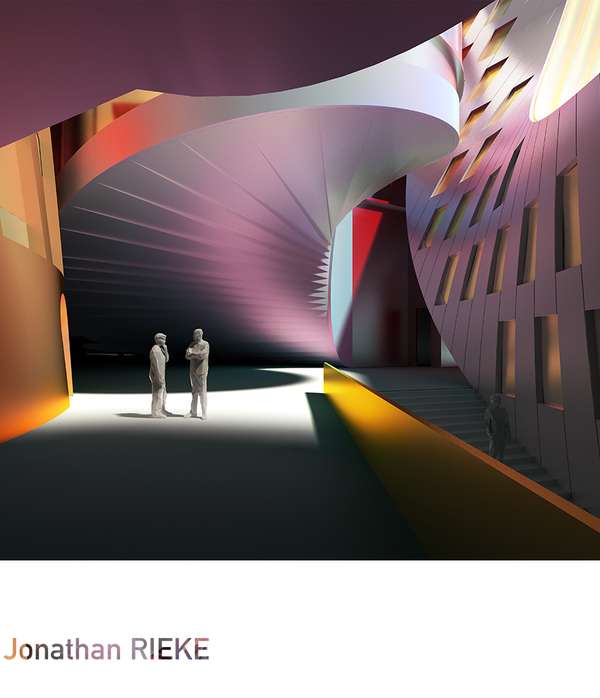
    Harvard, Graduate School of Design
    Critic: Andrew HOLDER

    suckerPUNCH: Describe your project.
    Jonathan RIEKE: “Tchotchkes, Knick-knacks, and Near-Models or a Celebration of All the Clutter in Architecture Offices” is a long title for a project with a relatively simple thesis…

    [MORE]


  • cambridge MASSACHUSETTS

    Harvard, Graduate School of Design
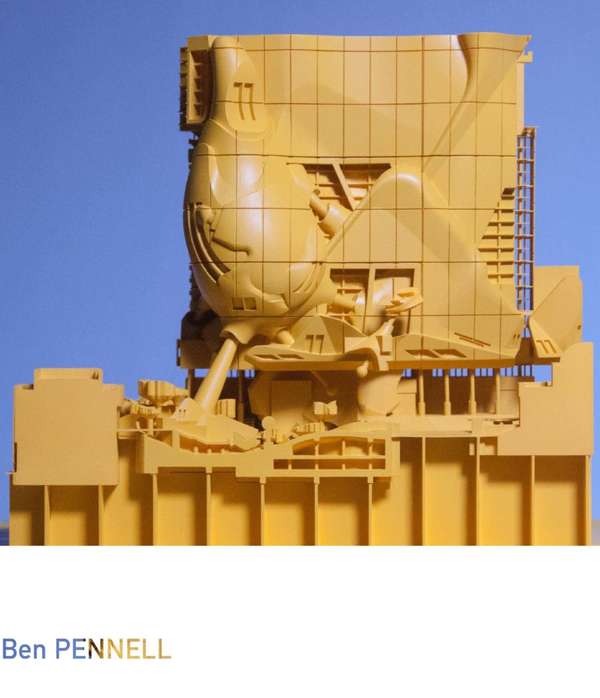
    critics: Preston SCOTT COHEN.

    suckerPUNCH: Describe your project.
    Ben PENNELL: God knows how many millions of square feet are needlessly piled on top of Columbia’s existing Campus cloister. Jake Mckim, Chad Mead, and Lord White roll over in their respective graves as unadulterated Manhattanism steam-rollers in apple-sauced crissy crossies…
    [MORE]

  • Andrew HOLDER, curator, "The Kid Gets out of the Picture."
    cambridge MASSACHUSETTS

    The vocabulary of early nineteenth-century picturesque landscape architecture is almost entirely alien to contemporary ears. Clumps, lumps, masses, groups, belts, hollows – these are a few of a vast catalog of objects that once belonged to design and have long since been absorbed into colloquial ubiquity. While the disciplinary meaning of these terms requires historical recovery, the project around which they were organized is entirely familiar.

    [MORE]

  • W. Gavin ROBB, "Roots Run Deep (A Tomb for Manfredo Tafuri)." Void.
    cambridge MASSACHUSETTS

    Harvard GSD
    advisor: Mack SCOGIN.

    suckerPUNCH: Describe your project.

    W. Gavin ROBB: Let’s talk about tombs for a minute.

    Death, memory, marker, transcendence. Architecture usually deals with these through symbol, or scale. . . .

    [MORE]

  • Elle GERDEMAN, "Manifesto for a Broken Urbanism."
    cambridge MASSACHUSETTS

    Harvard GSD
    critics: Danielle ETZLER & Eric HOWELER.

    suckerPUNCH: Describe your project.

    Elle GERDEMAN: The urban condition of Boston Government Center, a fabric of a distinct parts dictated by the nothing and divorced by the elevator, stands as a relic of a diluted modernist testimony. . . .

    [MORE]

  • Royce PEREZ & Yufeng ZHENG, "Medial Surface Detailing."
    cambridge MASSACHUSETTS

    Harvard GSD
    critic: Andrew WITT.

    suckerPUNCH: Describe your project.

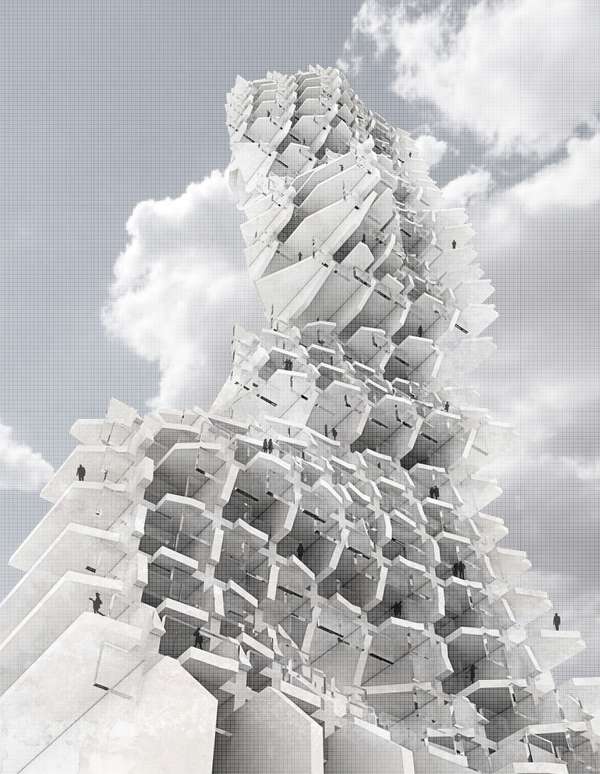
    Royce PEREZ & Yufeng ZHENG: Topological Surfaces deal with geometry at a local and global level of behavior. Locally, surfaces are defined through immediate curvature.

    [MORE]

  • Junfeng WANG, "Multiplication vs. Unification."
    boston MASSACHUSETTS

    Harvard GSD
    critic: Preston Scott COHEN

    suckerPUNCH: Describe your project.

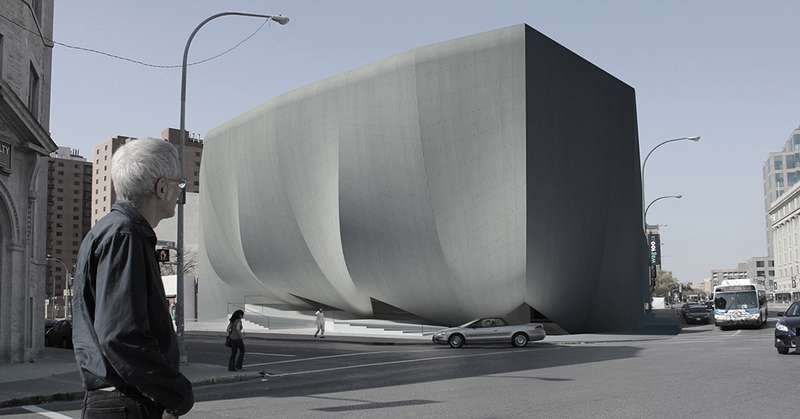
    Junfeng WANG: This is a studio project designing an addition to the Winnipeg Art Gallery, which aims to explore new formal possibilities in two categories: Unified Multiplicity and Redeployment.

    [MORE]

  • James LENG, Air Ops: A Retroactive Platform for Energy Exchange.
    boston MASSACHUSETTS

    Harvard Graduate School of Design
    critic: Eric HOWELER
    2013 James Templeton Kelley Prize Winner

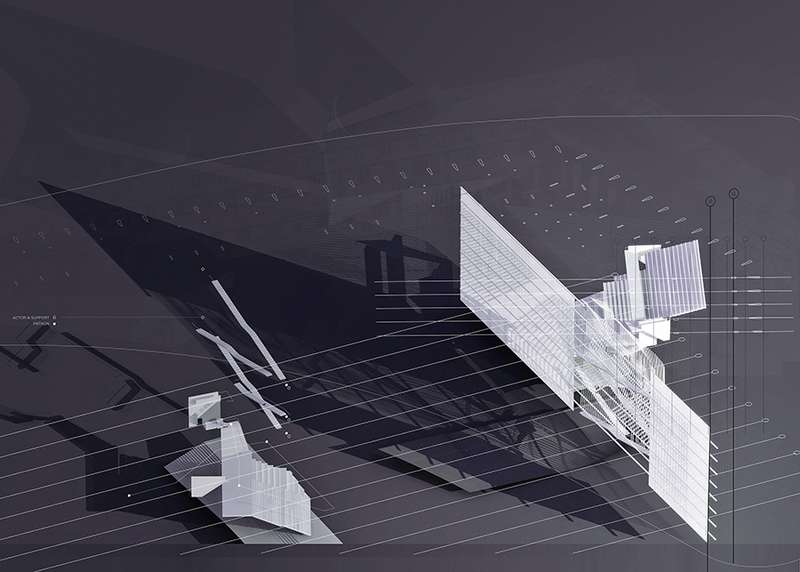
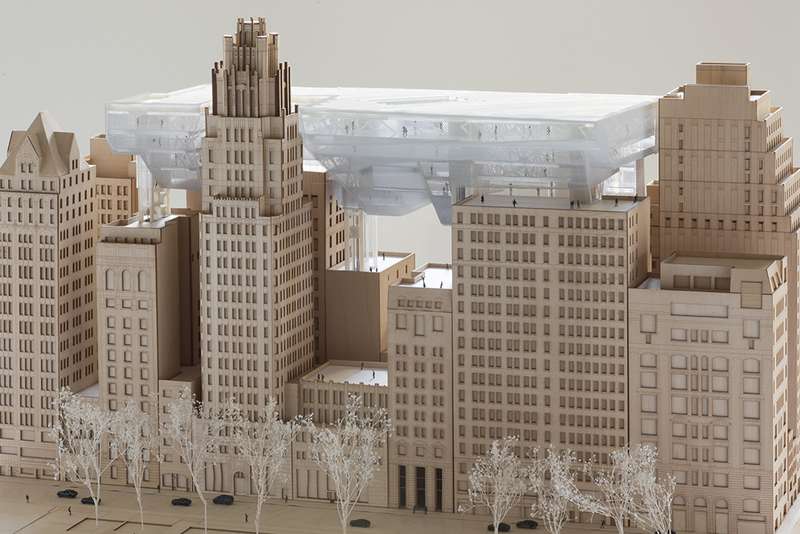
    James LENG: Air Ops is a project about re-envisioning zoning and energy-use in a post-Hurricane Sandy Manhattan. The core of the project hinges on the notion that zoning has always been one of the most potent elements in shaping the city, and in order for architecture to tackle the problem of energy at the urban scale, especially as a response to the increasing volatility of the climate, it must bring topics of sourcing and using energy into active dialogue with zoning, real estate, and the public realm.

    [MORE]

  • Point Cloud
    boston MASSACHUSETTS

    Harvard Graduate School of Design

    suckerPUNCH: Describe your project.

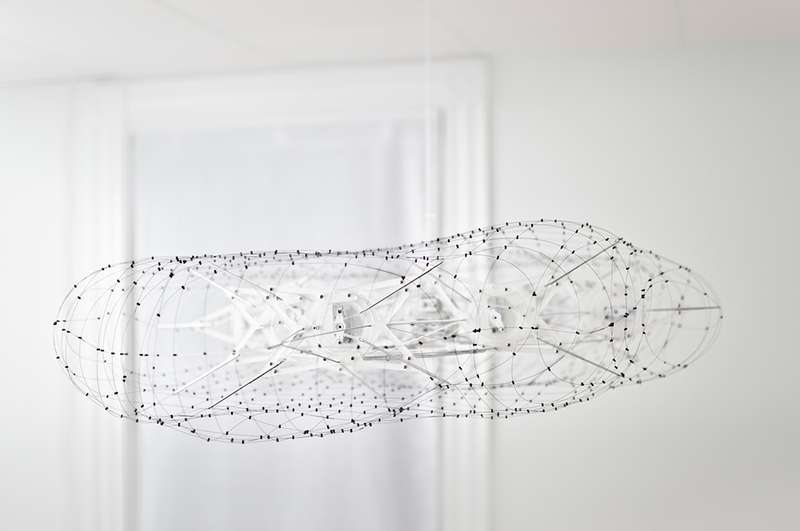
    James LENG: Point Cloud is an attempt to reimagine our daily interaction with weather data. Weather has always had a unique place in our lives, because it has a multiplicity that encompasses both the concrete and the indeterminate. It is the intangible context within which we build our lives and our cities, but it is also the physical element against which we create protective shelter. Most of the time it is an invisible network that we can see but are not aware of; yet it can manifest in a spectacle or disaster, come forward and activate our senses, make us forget our rationality in delight or fear.

    [MORE]

  • Video Can't Kill the Radio Star
    cambridge MASSACHUSETTS

    suckerPUNCH: Describe your project.

    ben BRADY: This thesis aims to explore the tension prevalent in tody’s libraries from all scales. Video cannot kill the radio star. Despite promises of obsolescence of one technology over another, we must realize that this is never the case. Video didn’t kill radio. Photography didn’t kill painting. Film didn’t kill the theater and the age of digital information will not kill the book and the library. “This” doesn’t kill “that,” but rather “that” may be re-defined by “this.” The library is at a unique place today as facing head-on the power, speed, and mobility of the digital world, while simultaneously being burdened by its own immense physicality.

    [MORE]