
brooklyn NEW YORK
nereida TRUJILLO: The “Blob” is a series of viscerally unsettling yet mesmerizing porcelain sculptures. They are reductive figural sculptures mimicking the folds and bulges of flesh.
VOTE for nereida’s sculptures at uncommon goods





brooklyn NEW YORK
nereida TRUJILLO: The “Blob” is a series of viscerally unsettling yet mesmerizing porcelain sculptures. They are reductive figural sculptures mimicking the folds and bulges of flesh.
VOTE for nereida’s sculptures at uncommon goods

corvallis OREGON
suckerPUNCH: describe your project.
vladimir BULATOV: Hi-tech process of direct metal printing is used to transform mathematical ideas into real life beautiful objects. Some mathematical description is available at bulatov.org/math/
3-D printing, jewelry, mathematical, sculpture, vladimir BULATOV
Comments Off on mathematical sculpture and jewelry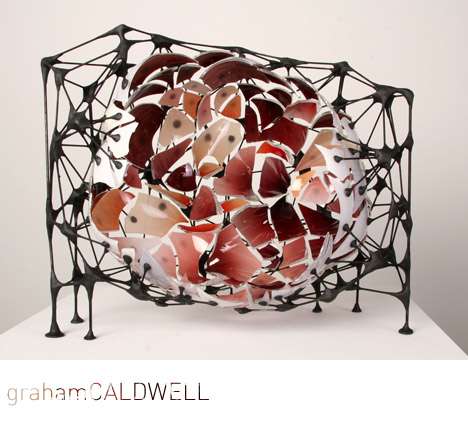
brooklyn NEW YORK
suckerPUNCH: describe your project.
graham CALDWELL : This is work for a show I just installed at G Fine Art in Washington DC
The show title is The Uncanny Valley
sP: what or who influenced this project?
gC: The work of Robert Smithson and Gordon Matta Clark influenced this show
layers of paper build up in charles CLARY’S compositions to appear as mutant rose windows hiding behind gallery walls. the color gradient created by the changing shades within the stacks amplifies their depth and gives the clusters a pop as they replicate and spread across the room.
installation, paper, sculpture
Comments Off on double diddle degradationfictitious biological beings existing in a timeless flux characterize the work of u-ram choe. kinetic sculptures bear the names and narratives of classic scientific rhetoric while breathing and floating into metallic sunsets. entrails of nuts and bolts and wings of razor-sharp steel shift through a multitude of realities in model, drawing, and diagrammatic form. somehow simultaneously familiar and otherworldly, the creatures of u-ram choe possess a compositional flow contrasted by their mechanical limbs. insects look like dragons and birds like sea creatures unified through an exquisite conglomeration of cells and scales into new hybridized scientific classifications of form and movement, nature and machine.

manchester ENGLAND
richard SWEENEY utilizes the pliability of ordinary paper in his search for form. stemming from an interest in origami as a child, sweeney explores intricacy as it emerges through folding and creasing. by taking cues from growth principles and his love of trees, his work often references the organic through unique interpretations. this work demonstrates the potential of capturing volume through the manipulation of surface and sheet material.
