





Ads
Ads

Ads

Ads

Ads

Ads

Ads

Ads

Ads

Ads


  • Peter EISENMAN.
    beijing CHINA

    The exhibition, Design Intelligence: Advanced Computational Research, opened in 751-D, Beijing, China, on Friday 26 September 2013. The exhibition included the work of 32 of the leading schools of architecture in the world, including the AA, Harvard, USC, UPenn, MIT, Yale, Princeton, SCI-Arc, UCLA, UMichigan, Bartlett, IaaC, DIA, Angewandte, Tsinghua and Tongji, and was curated by Neil Leach and Xu Weiguo. The catalogue was published by China Architecture and Building Press.

    exhibition & catalogue: “Design Intelligence: Advanced Computational Research,” curated and edited by Neil LEACH & XU Weiguo
    Friday, 09/26 (opening) / 751-D
    Beijing 100015, China

    [MORE]

  • Emily CHEN CHOI, Deep Facade. Model.
    los angeles CALIFORNIA

    SCI-Arc
    advisor: Florencia PITA

    suckerPUNCH: Describe your project.

    Emily CHEN CHOI: Deep Facade is a thesis that privileges the façade as an architectural element and pushes the façade to become the entire architectural experience. Traditionally, a façade operates as a two dimensional element that indexes the building and establishes boundary. It is the threshold that separates the interior from exterior, indicating a change in experience as one approaches and enters a building. By thickening the facade to an extreme, Deep Facade challenges this traditional notion of a thin surface facade, thereby prolonging the cadence of entering a building and blurring the distinction between interior and exterior.

    [MORE]

  • Zaha Hadid Architects, Serpentine Sackler Gallery. Photo: Luke HAYES.
    london UNITED KINGDOM

    The Serpentine Sackler Gallery consists of two distinct parts, namely the conversion of a classical 19th century brick structure—The Magazine—and a 21st century tensile structure. The Serpentine Sackler Gallery is thus—after MAXXI in Rome—the second art space where Zaha Hadid Architects have created a synthesis of old and new. The Magazine was designed as a Gunpowder Store in 1805. It comprises two raw brick barrel vaulted spaces (where the gunpowder was stored) and a lower square-shaped surrounding structure with a frontal colonnade.

    [MORE]

  • Shane BEARROW, The Birth & Reverberation of an Object.
    college station TEXAS

    Texas A&M University
    critics: Gabriel ESQUIVEL, Weiling HE, & Ergun AKLEMAN

    suckerPUNCH: Describe your project.

    Shane BEARROW: “The Birth and Reverberation of an Object” is, in part, an analysis of Graham Harman’s object-oriented ontology, in which a natural object is stripped of its ontology through a series of craft iterations. The basic idea of this project was to conduct a series of drawing exercises going from analog to digital, in order to produce a unique shape. This process was inspired by Robin Evans’ essay “Translations from Drawing to Building.” All steps in the process were unique, though clearly traceable and geared toward the autonomy of an architectural object.

    [MORE]

  • Stephan RITZER, Maximin RIEDER, & Klemens SITZMANN, Re-Reading City
    vienna AUSTRIA

    University of Applied Arts Vienna
    Studio Hani RASHID
    critics: Hani RASHID, Liam YOUNG, Kivi SOTAMAA, & Christoph MONSCHEIN

    suckerPUNCH: Describe your project.

    Stephan RITZER, Maximin RIEDER, & Klemens SITZMANN: Within our project, we re-read certain urban typologies, from a two-dimensional to a three-dimensional state. Our ambition was to re-think on former type categorisations which were determined and defined for an urban layout, relying on the cartesian x-y-z axis.

    [MORE]

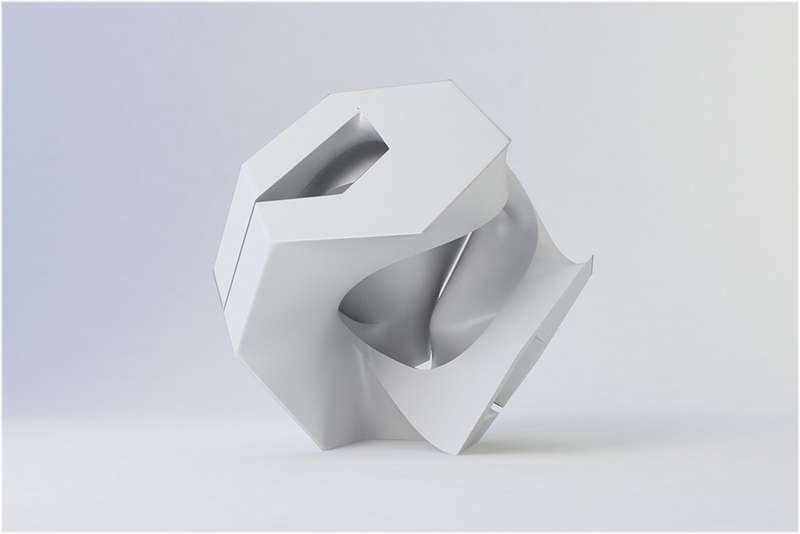
  • Alex PHI, Segregated Monoliths.
    los angeles CALIFORNIA

    SCI-Arc
    advisor: Florencia PITA

    suckerPUNCH: Describe your project.

    Alex PHI: Typically, a monolithic structure is solid, unbroken, rigid, invulnerable, and whole. A true monolithic piece of architecture is large and unified with no recognizable parts. The investigation deals with displacing and dislodging both formal and organizational aspects of a building while retaining a sense of wholeness.

    [MORE]

  • CxMxD, Oyster House. Model.
    new york NEW YORK

    Oyster House sets a new standard for entry-level housing in Wellfleet, Cape Cod. Developable land in Cape Cod is at a premium since much of the open space is now protected natural landscape. By building smaller, Oyster House achieves more density with less impact on Cape Cod’s precious landscape. Oyster House uses less; less energy, less building material, less building area. Simultaneously, the house does more. Its pentagonal plan makes for easy siting in multiple orientations, maximizing privacy, permitting views, and responding to the sun’s path through the southern sky. The house is conceived of as a repeatable unit that can be deployed across multiple sites in the town of Wellfleet—as a single unit and as a community of houses.

    [MORE]

  • CHOI & STEINBUCH, Visceral Painterly: Shadows Refine Form. Section.
    los angeles CALIFORNIA

    SCI-Arc
    critic: Marcelo SPINA

    suckerPUNCH: Describe your project.

    Andrew CHOI & Harrison STEINBUCH: This assignment revolved around a Performance Theater in downtown Los Angeles. The project was an investigation into the term chiaroscuro, a set of representational techniques from the Renaissance that creates a contrast between the form and its context. In discussing a “painterly effect,” we talked about a painting’s ability to use hard shadows to represent space and distort your perception of form in space.

    [MORE]

  • Scott CLAASSEN, Totally Useless Totems.
    ann arbor MICHIGAN

    University of Michigan, Taubman College of Architecture and Urban Planning
    critics: Ellie ABRONS & Ben SMITH

    suckerPUNCH: Describe your project.

    Scott CLAASSEN: Totally Useless Totems develops a series of architectural totems and their configurations, free of prescribed function or meaning in order to create spaces defined by subjective relationships. These totems are objects that have figure, but shape the space around them primarily through experiential, tactile, or narrative relationships. In this way they embody both the graphic characteristics of images as well as the spatial potential of objects occupying territory.

    [MORE]

  • Francisco MARTINEZ, Broad Museum Redux.
    los angeles CALIFORNIA

    SCI-Arc
    critic: Tom WISCOMBE

    suckerPUNCH: Describe your project.

    Francisco MARTINEZ: The project take the idea of box/objects in a box and turns it inside out by taking the objects out of the box and push them against the envelope from the outside to create interior spaces.

    [MORE]